Posts

Showing posts with the label Gluten free

Homemade yogurt and poached quince

Image
     In Greece there are three different types of yogurt, depending on the milk (goat, sheep or cow) used to make it.       Yogurt made from cows’ milk is the most popular because of its mildness; it has a less sour taste compared with yogurt made from the milk of goats or sheep.      In Greece we call yogurt ‘’strained ‘’ if it has undergone a straining process after it has been created. As a result it has far less whey than plain yogurt. Its dense silky texture makes it ideal for cooking too.       If you are lucky enough to have access to fresh milk from local farms, you should definitely try at some point to make yogurt at home and experience its wonderful taste. If you have kids, they will be fascinated by the process that magically turns milk into yogurt.      We make yogurt at home when we have extra milk that is close to its expiry date; this way we give it at least an extra week of shelf life. ...
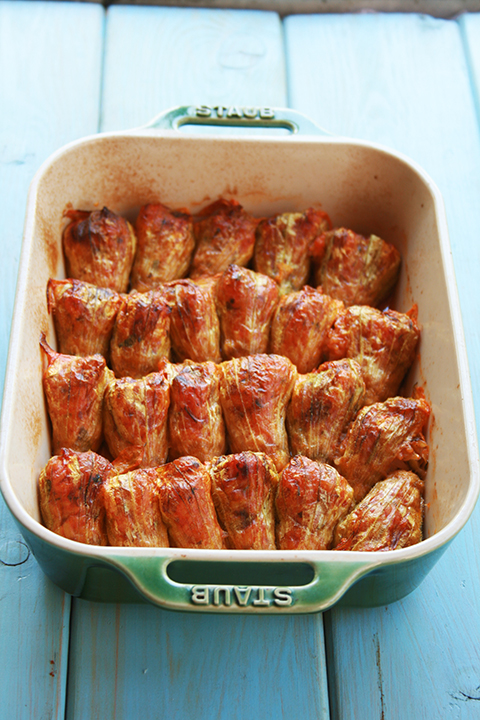
Zucchini flowers, stuffed with rice, summer veggies, and herbs

Image
          Searching the Internet for some info on edible flowers, I saw some beautiful pictures of cakes and other fancy desserts decorated with, among other exotica, small blue and yellow pansies and chrysanthemum flowers. Did we always eat pansies on our cakes and in colorful salads or is it one more innovation from Noma (with its inventive kitchen) that has been immediately adopted by all of us?        Well, in fact, dried flowers have been used for thousands of years as spices in cooking or in herbal teas for medicinal purposes. Their use in modern cooking today as decorative edible ingredients is really a rebirth of this very old tradition.  Roses and zucchini- squash flowers have never stopped being used in cooking.       In Greece we make rose petal jam and we use zucchini flowers in different savory recipes.  When I was a child, whenever my mother made stuffed tomatoes, there would always be some sp...

Greek yogurt macaron, with a honey core

Image
I often wonder what could be characterized as a typical Greek flavor in pastry; and I usually come to the conclusion that yogurt and honey make a pair that many could consider as a classically Greek. So if I make a panna cotta with Greek yogurt and honey, would people think that this Italian dessert has a Greek twist? I can’t judge but it definitely tasted good. Since I have started this ‘alchemy’ of turning famous desserts into Greek with the addition of yogurt and honey, I have discovered that French macarons lend themselves to the treatment! The first time I ever saw macaron was five or six years ago when I started reading food blogs and came across the blog Tartelette . I remember how beautiful they looked in the pictures. Then I tried them in a pastry shop in Athens and was sure I should try making them myself. My research on the internet showed that macarons are more or less the ‘’Holy Grail’’ of every avid food blogger and I decided I needed one more cooking book, this time one ...

Black eyed peas stewed with greens

Image
This post was especially written for Pretty Greek Villas , a site owned by my friends Marie- Louise and Ben. If you are thinking Greece this summer, take a look,for some of the most beautiful villas in the country. Peloponnesian cuisine is influenced by its sea-girt mountainous topography. Olive oil, wine, grains, pulses, herbs, wild greens, fish, goat and sheep meat, cheese and honey have been staples in local pantries for millenia.  Though olive trees do not flourish at its highest altitudes, still one third of the country’s entire production comes from here because of the quality of the soil and the mild climate. In fact, Peloponnesian cuisine could be described as an olive oil cuisine since generous amounts of olive oil (often added towards the end of cooking) are poured over greens, beans, and all sorts of stews.  The Northern Peloponnese cuisine has also been influenced by migrations over its long history and so it comprises elements of both the mainland and the islands,...

Savory cheese flan, with walnuts and pomegranate sauce

Image
      Have you ever wondered what ancient Greek cooking would taste like? If ancient Greeks could have known that people in the future would be interested in their cuisine, they would most certainly have written down everything about their art of cooking.  During what we now call the ‘classical period’ ancient Greek civilization reached its peak. Tragic plays and Aristophanes’ comedies describe daily life including scenes around a table. Deipnosophists (from deipnon - dinner and sofos - wise) writing about the philosophic discussions taking place in rich people’s houses during gastronomic feasts described the menus in great detail. These sources inform us that Athenians had three daily meals out of which ‘’deipnon’’, late in the evening, was the last and most rich meal of the day. Dinner in modern Greece is still called ‘’deipno’’.  Their diet consisted of a great variety of fish, meat from both game and stock farming, grains such as barley and wheat and, o...

Apples cooked in vanilla syrup

Image
    An urge to search for traditional recipes with apples resulted because of a walk we took last week near our cottage. We came across a familiar old apple tree still standing next to the ruins of a house. It has never stopped producing apples yearly for more than six decades now as my mother remembers, with no gardener’s care -  just running water from a spring on the property. We hadn’t explored this corner of the village for a couple of years and we were pleased to find that the tree was still productive and that there were still some apples left for us by the birds who had already taken their share. I love that sense of déjà vu under a tree like this, imagining the repeated ritual of harvesting its fruits.  Though apples have been cultivated in Greece for many centuries yet, as far as I know, there are no recipes in Greek traditional cuisine like pies and cakes, which call for apples. They have always been the most popular year round fruit in every house pantry...

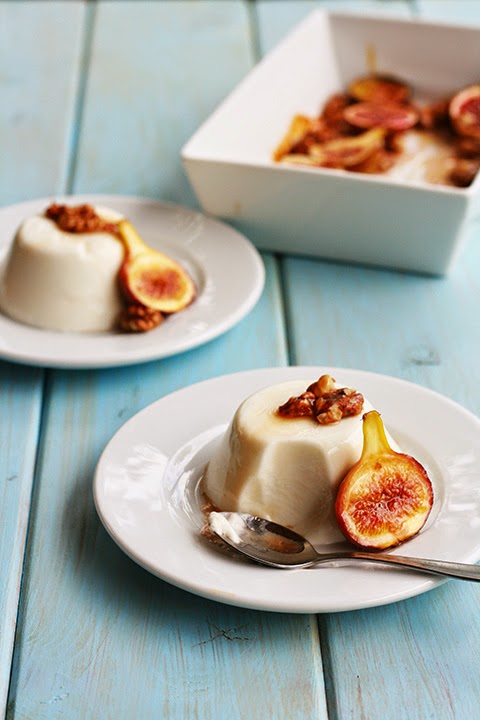
Greek yogurt panna cotta, and baked figs with honey and walnuts

Image
      My grandfather planted a fig tree in the garden of our cottage that, despite its age, has never stopped producing fruits year after year. Fig trees, like olive trees, live long. They are commonly found in the Greek country side next to old houses or ruins, still in perfect shape and full of fruits every August, as if time for them is an endless youth.      I’m sure you have had that ‘feeling’ when visiting an older relative’s house after many years, a sense that you remember it being bigger and suddenly you realize that houses usually keep their shape and that it is you who, like Alice in Wonderland, grew larger. I had that sense the other day with the fig tree in our garden. As a child I used to climb on its branches to pick more figs and back then I used to think it was huge.       Our figs are yellow, the variety used for sun dried figs. Every August my grandmother would lay them on thatch on the terrace under the hot summer sun...

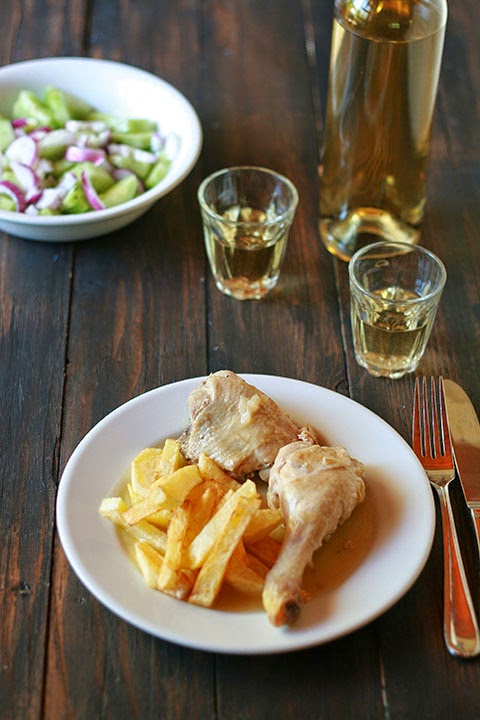
Lemonáto - Lemon flavored chicken stew

Image
      Lemon flavored casserole stews, or lemonáta (λεμονάτα) as we call them in Greek, are very popular because of the refreshing and slightly sour taste that the lemon juice and peel give to these dishes. Although lemon flavored dishes are cooked all year long, summer is the most popular season for lemonáta. Hot weather calls for light flavors! Poultry and beef are the most popular meat choices for this dish.  Lemonáto can be served with pasta, rice or most preferably with homemade fried potatoes. Lemonáto  1 chicken, cut into 8 serving pieces 100gr olive oil 1medium onion, finely chopped 1 small garlic clove, finely chopped Salt and ground pepper to taste 1litre of hot water or chicken stock Juice and the peel from one lemon In a large skillet over medium heat pour the olive oil and when hot add the chicken, skin side down, and brown quickly for 3 minutes. Turn the chicken over, add onion and the garlic, reduce the heat to medium- low and let the onion so...

Visináda - Sour cherries refreshing beverage

Image
      Visináda (βυσσινάδα) is one of the favorite beverages in Greece. It is made with the juice of sour cherries and sugar, cooked until it’s concentrated into a thick, deep purple syrup. Though sour cherries are not usually eaten raw, they taste just wonderful when cooked with sugar.  In my little village we have only wild sour cherry trees; I never found out who first cultivated them here but they must have loved this place. And even if you plant only one tree, in a few years you end up with a small wild sour cherry forest because they tend to expand like crazy. Though you need to pit twice the amount of the wild fruit for a recipe compared to cultivated sour cherries, the wild variety has a superb taste. Sour cherries can be found in farmer’s markets at the end of June and early July in Greece; in July and even August in more northern countries. To enjoy visináda, pour in a glass, one part of syrup and four parts of ice cold water or club soda and fill with ...

Amygdalotá - almond meal, gluten free cookies

Image
      Almond based confections or amygdalotá (αμυγδαλωτά) as we call them are found all over Greece in endless versions. They can be shaped like pears, balls, or little logs and are usually flavored with scented flower blossom water,  a liquor or, less often, with vanilla.  They are often sold filled with jam or chocolate ganache  and resemble French macarons. Amygdalotá in many Aegean islands are a special little treat symbolizing happiness and prosperity  and offered to guests  at weddings and Christenings,.  The version of amygdalotá I made today is found in pastry shops all over the country. They are plainer than the filled versions and made with a higher ratio of almond meal. Amygdalotá Makes 18 big or 36 bite-sized, cookies 250gr blanched almonds 150gr confectioner’s  sugar 2 egg whites (70gr) Vanilla flavoring a pinch of salt 18 almonds for decoration   In a food processor fitted with the steel blade grind the almonds ...

Feta and sundried tomato balls in oregano and chili flavored olive oil

Image
      What might characterize our family meals in Greece is the variety of dishes served. Housewives rarely cook only one dish for the family and, even when they do, three or more side dishes are usually served as well. We love little bites of this and that, what we call mezedes ; they are most often cheese, olives, pickles, all sorts of savory spreads,and flaky pies with fillings that vary according to the season of the year. Preparing them at home demands some effort but they cost less and offer flavorful snacksevery day.  Meze bites are also served when you want to have a snack with your wine, beer or ouzo but not eat an actual meal. In Greece there are restaurants that serve only meze dishes from an endless list; these places are called ‘’mezedopolia’’ (μεζεδοπωλεία).  Feta balls are a wonderful meze to prepare ahead and can be served straight from the jar to the table or spread on slices of bread. Toasting the bread with feta under the grill for a few minu...

Patzarosaláta - Beetroot, Greek yogurt and walnut salad

Image
Tsatziki may be an all time classic for Greeks but, when we had guests at home, my mother always thought it was too garlicky for everyone’s taste. Of course you can use less garlic but then it wouldn’t be a tsatziki!  Beetroot salad (patzarosaláta, παντζάροσαλάτα) is a wonderful alternative side dish.  With just an idea of garlic and an impressive light purple color when mixed, it is ideal for any occasion.  It compliments both vegetable and meat stews, as well as barbecued and oven baked dishes. Greek yogurt with its thick consistency holds the ingredients in the salad together, giving a silky texture to the final dish. You can use low fat yogurt but since this dish is very healthy and balanced, why not use full fat yogurt to contribute to a rich taste?  Walnuts match really well with the other ingredients and provide a light nutty flavor.  Patzarosaláta 250gr Greek full fat yogurt 150gr cooked beetroot (a big bulb) 30gr olive oil (2Tbsps) 1 small garlic clov...

Karitháta - Super healthy walnut, honey and oat treats

Image
 These treats have always been our family’s way to celebrate the new walnut (Greek-καρύδια) crop. I remember my grandmother preparing them for the celebration of the Archangels Gabriel and Michael on the 8th of November. Their tiny chapel is in a village next to ours and, on the day, everyone would bring homemade cakes, treats, or hot coffee and tea to be shared in the chapel’s yard after the service. As a kid it was the only time I really looked forward to going to church because I could sample so many sweets in one morning. At the end of spring, before they could spoil and became tangy from the summer heat, my grandmother would use the remaining walnuts to make a final batch.     I thought I’d try a healthier version of this treat using honey and oats instead of the sugar and grated wheat rusks the original recipe called for, and I’m happy it really worked. Karitháta  Makes about 16 treats 150gr finely chopped walnuts 50gr oats, finely grounded 3Tbsps honey 2Tbsp ...