Posts

Showing posts with the label almond

Macedonian Halva (Μακεδονικός Χαλβάς)
Image
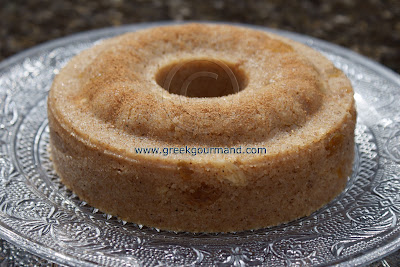
For those of you who are fasting for Lent or practicing vegetarian/vegans, this is your lucky day. Happy St. Patrick’s Day! Irish eyes are smilin'! :) Halva ready for service - Click to enlarge image One of the hardest aspects of a fast or strict dietary regimen is avoiding tempting sweets and finding acceptable substitutes for dessert courses. This is especially hard on kids. Confections like this one are popular amongst Greek families during the Lenten period. I simply loved this stuff as a child. Still do! There are probably as many variations on this recipe as there are Greek matrons with culinary opinions. My recipe is quite basic, feel free to add or substitute other elements like pine nuts, sesame seeds, walnuts, or whatever else tickles your fancy. A few drops of orange blossom water or even some lemon rind in the syrup could also be a nice touch. I should mention that not only are there numerous permutations for this recipe, there are also alterna...
Pasteli (Παστέλι)

Image
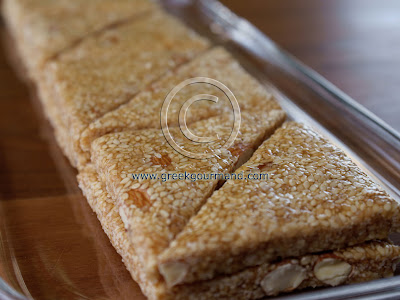
Ever wondered what sorts of foods the ancient Greeks ate? Here is a recipe for a healthful chewy snack that has satisfied and pleased children and adults alike for millennia. My Pasteli triangles - Click to Enlarge Image. Pasteli , the mere mention of the word will bring a smile to any Greek’s face. An all natural confection, in its simplest form, pasteli is composed of two ingredients: sesame seeds and honey. The addition of nuts such as walnuts, pistachios, or almonds is also common in some versions of pasteli . Sesame has been an ingredient in the Greek pantry since time immemorial. Mention of it is made in Linear B tablets found at Mycenae dated to the 14th Century BC. Indeed, the English word “sesame” is itself derived from the Greek word σησαμη or sēsámē. This combination of honey and sesame seeds to form wafers of chewy wholesome goodness is one Greek food concoction that has been around - quite literally - for ages. In the Archaic age and later in the Classical and H...

Spiral as in Baklava

Image
My Cretan spiral baklava ready for action - Click to Enlarge The origin of baklava , a pastry composed of layers of phyllo containing nuts and soaked in honey syrup, is something of a bone of contention among certain types who have nothing better to do with their time. I have heard Turks, Lebanese, and others claim it as their own. Whoever may have invented the dish, whether Greek, Levantine, Turk or whatever, it is not made in the same way by all; the variations include the types of nuts used, the ratios of nuts to phyllo, the shapes of the dessert, and the spices and flavourings that go into the pastry itself or into its syrup. Frankly, I am not overly concerned as to whether the Byzantine Greeks, the Arabs, or the Ottomans, or even the Chinese (!) created this dessert; I know it simply as a part of traditional Greek cookery, and as far as I am concerned, baklava is Greek. This particular recipe is from Crete , from a family that I had met while backpacking on the island back ...

As Greek as Almond Biscuits... Amygdalota

Image
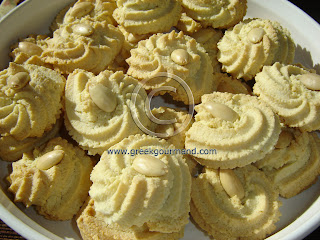
Greek almond biscuits When making social calls to friends and family, Greeks invariably show up toting a ribbon-tied box from a local Greek bakery. Nine times out of ten, the box will contain some of these cookies. My earliest childhood memories of welcoming visitors and paying visits include these biscuits. In my reminiscences, they always conjure up images of good times and wholesome relationships. Amygdalota biscuits are a staple product in any Greek bakery and they are wildly popular. They are the perfect accompaniment to a Greek coffee and an ideal anytime treat. If you are not already familiar with these cookies, then you will be in for a pleasant surprise should you decide to mix up a batch. The ingredients are simple and the process is straightforward and rewarding – both visually and gastronomically. Recipe: 1 pound (½ kg.) blanched almonds 1 ½ cups of sugar 2 eggs 1 tbsp. fine semolina 1 tbsp. orange blossom water 1. Add the blanched almonds and the semolina to a food p...

23 Almonds a Day Keep the Doctors Away - Bianketa

Image
Biankéta ... Almond Tangerine Bites. Puréed blanched almonds flavoured with tangerine rind and juice, sweetened with brown sugar and dusted with confectionery sugar before serving. These wonderful little delights leave a lingering tangerine flavoured scent in your mouth long after you eat them up! Cute little morsels... The almond (' amygdalo ' in Greek, pronounced "AH-MEEG-THA-LOW") has a long history in Greece. Today, Greece is the fourth largest producer of almonds in the world after the United States, Spain and Italy. The epicentres of Greek almond production are the prefectures of Magnesia, Larisa, Serres and Kavala, and the cultivation of the almond tree is a traditional practice that dates back to ancient times. In the Classical period, almonds were common "dinner ornaments" ( αναθήματα δαιτός ) and those from the island of Naxos were especially prized. Other centres of almond production in the ancient Greek world included Cyprus, Thasos, Paphlagonia...