Posts

Showing posts with the label mastic

Mastiha Pumpkin Spice Soup - Κολοκυθόσουπα με Μαστίχα
Image
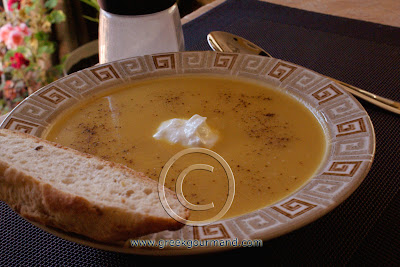
An exotic twist to my mother's pumpkin soup recipe. Makes for a rich and inspiring autumn dish that will leave you feeling warm and satisfied, physically and intellectually. Mastic (or Mastiha) Pumpkin Spice Soup for autumn lunch. Click to Enlarge. It is exciting times on the Greek culinary front. The Greeks are re-discovering one of their ancient aromatics, the rarest spice on the planet: mastiha (mastic). As exciting a development as this may be, it is a situation fraught with gastronomic risks. In the drive to incorporate mastiha into a “Greek” cooking palette and create new taste sensations, there have been some interesting offerings coming out of test kitchens all over the planet. Working the resin, mastiha, into a dish is not an easy thing. One must be familiar with the flavour of the aromatic and that takes practice. It is a good idea to buy the raw resin crystals and chew them to acquire the scent. When you do, you will realize it is a challenging flavour to incorpo...
Chocolate Tsoureki (Τσουρέκι Σοκολατένιο)

Image
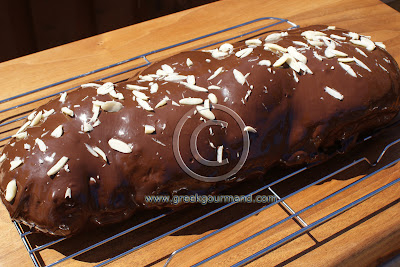
 I visited the northern Greek province of Macedonia. We stayed for several days in Thessaloniki where we admired and sampled the sights and tastes of the beautiful port city. This recipe was inspired by that visit. My Chocolate Tsoureki - Click to Enlarge Image Tsoureki is essentially a Greek brioche style of sweet bread. The flavours of this bread consist of a hint of orange combined with mahlepi and a subtle essence of mastic (mastiha). It is usually made at Easter and is a universal element in the celebration of this most important holiday of the Greek calendar. Such braided breads are an ancient tradition among Greeks. The inspiration for this variation on the traditional tsoureki came from the storefront window of one of Thessaloniki’s best known bakeries, Τερκενλης ( Terkenlis ), which has been serving up its famous pastries since 1948. Today, Patisserie Terkenlis has several locations, mostly in Thessaloniki, with two shops in Athens, one of which is located at the...

Mastic Shrimp Saganaki (Γαρίδες Σαγανάκι με Μαστίχα)

Image
This is one of my Greek food signature dishes. I created this recipe for my wife and it is now her favourite shrimp dish. My Mastic Shrimps served over of a bed of rice - Click to Enlarge Image Here in North America, the term saganaki often refers to a Greek fried cheese that is set alight to resounding shouts of “Opa!” In truth, the word saganaki refers to a single-serving frying pan with two handles. In Greece, a saganaki can be a fried cheese, or it can be a shrimp saganaki and/or a mussels saganaki , both of which are usually tomato sauce based dishes and typically include Feta cheese. If this is confusing, no worries, it’s all Greek food to me too! Shrimps in the pan and ready for turning - Click to Enlarge Image This particular version of my dish does not include the Feta cheese as it is meant to be a fast-friendly recipe. Easter is just around the corner and many Greeks observe the Lenten fast during this period which means dairy is a no-no. If you are not fasting, fe...

Mastic - Mastiha (Μαστίχα)

Image
From time to time, I like to mix a reflection or two in among my Greek food recipes. Today’s topic is one that really tickles my fancy. As far as spices go, there is surely none more unique or rarer than the mastic resin from the Greek island of Chios, reputed birthplace of the poet Homer. Pure mastic resin "tears" - Click to Enlarge Image. Mastic (or ‘masticha’ as we say in Greek, pronounced “mahs-TEE-ha”) is a resin produced by an evergreen shrub, Pistacia lentiscus , which is related to the pistachio tree. The word 'mastic' is derived from the ancient Greek verb ‘ mastikhein ’ which means “to chew”. The English word “masticate” (to chew) is derived from this root as well. While the mastic shrub, also known as skhinos in Greek or lentisk in English, does grow elsewhere in the Mediterranean region, the mastic spice resin is only produced in the plots of the Mastic-Villages or Mastichochoria (Μαστιχοχώρια) in the southern end of Chios. It is believed that u...

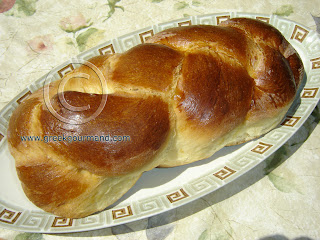
Tsoureki - The Bread That Swallows Its Tail

Image
Tsoureki… Greek Easter Bread Yesterday, in preparation for the Greek Orthodox Easter (or Pascha ) celebration, I made the traditional braided Greek Easter Bread known as tsoureki . I baked three loaves, one for my wife and I, one for our goddaughter, and one for our godson. As is typical, along with the bread, I dyed a dozen hardboiled eggs red. There is nary a Greek home anywhere on the planet that will not have these two elements present in the Holy Week to come. Easter is the most important religious celebration in Greece , and the customs and practices related to this period of the calendar are as diverse as the topography and regional differences within Greece . Yet, the dyed eggs and the plaited bread are universal. The reason we braid the tsoureki is to symbolize the Resurrection of Life that comes with springtime. The wedding of this symbolism to the Orthodox Christian Calendar and the figure of Jesus Christ is not a coincidence. The tradition of plaiting bread is old; ...