Posts

Showing posts with the label Great Lent

Gluten-free zucchini fritters (κολοκυθοκεφτεδες - χωρις γλουτενη)

Image
The use of alternative flours in Greek cooking goes back to a different era, when wheat flour (now more commonly used in Greece) was expensive or difficult to obtain. The buckwheat bread and flour used in this dish imparts a subtle 'toasted bread' flavour. Of course you can use wheat bread and flour in this recipe if you prefer, or experiment with a half/half mixture of wheat and buckwheat flour.  Gluten-free zucchini fritters (κολοκυθοκεφτέδες - χωρίς γλουτένη) Serves 4-5; Preparation time: 30 mins; Cooking Time: 25 minutes Ingredients 1 kilo of zucchini 1 medium onion (not a sweet variety) 1 egg 1 cup gluten free bread crumbs (I used toasted buckwheat bread) 1 teaspoon of gluten free baking powder  3/4 cup of grated kefalotiri or kefalgraveria 1/2 bunch of mint or parsley, finely chopped Buckwheat flour Salt and pepper Olive oil for frying Method 1. Clean and wash the zucchini well and then grate the zucchini using the coarse side of the grater. Place in a mesh sieve. ...

Ma's octopus pilafi (χταποδι πιλαφι | συνταγες μαμας)

Image
There is nothing my mother in law likes more, than to be in her kitchen creating food for her family. After a serious illness over the last few months, it has been wonderful to see Ma feeling just well enough again to be back in the kitchen doing what she loves best - cooking. When she is not cooking, then there is nothing more that we like to do together more, than talk about food and recipes. Yesterday, Ma shared with me two of her recipes, octopus pilafi, a traditional Greek Lenten dish and her own, more revolutionary (and certainly not traditionally Greek), chilli puree.  My lovely brother in law recently shared with me a story about Ma's discovery of chilli. It was about 20 years ago and after a period of experimenting, she hasn't looked back since! Ma loves chilli for its reported health benefits as well as the heat and flavour it brings to her dishes. However, as it is not a traditional Greek ingredient, Ma uses it sparingly in the form of a milder chilli puree made from...

Μελιτζανοσαλατα (Melitzanosalata)

Image
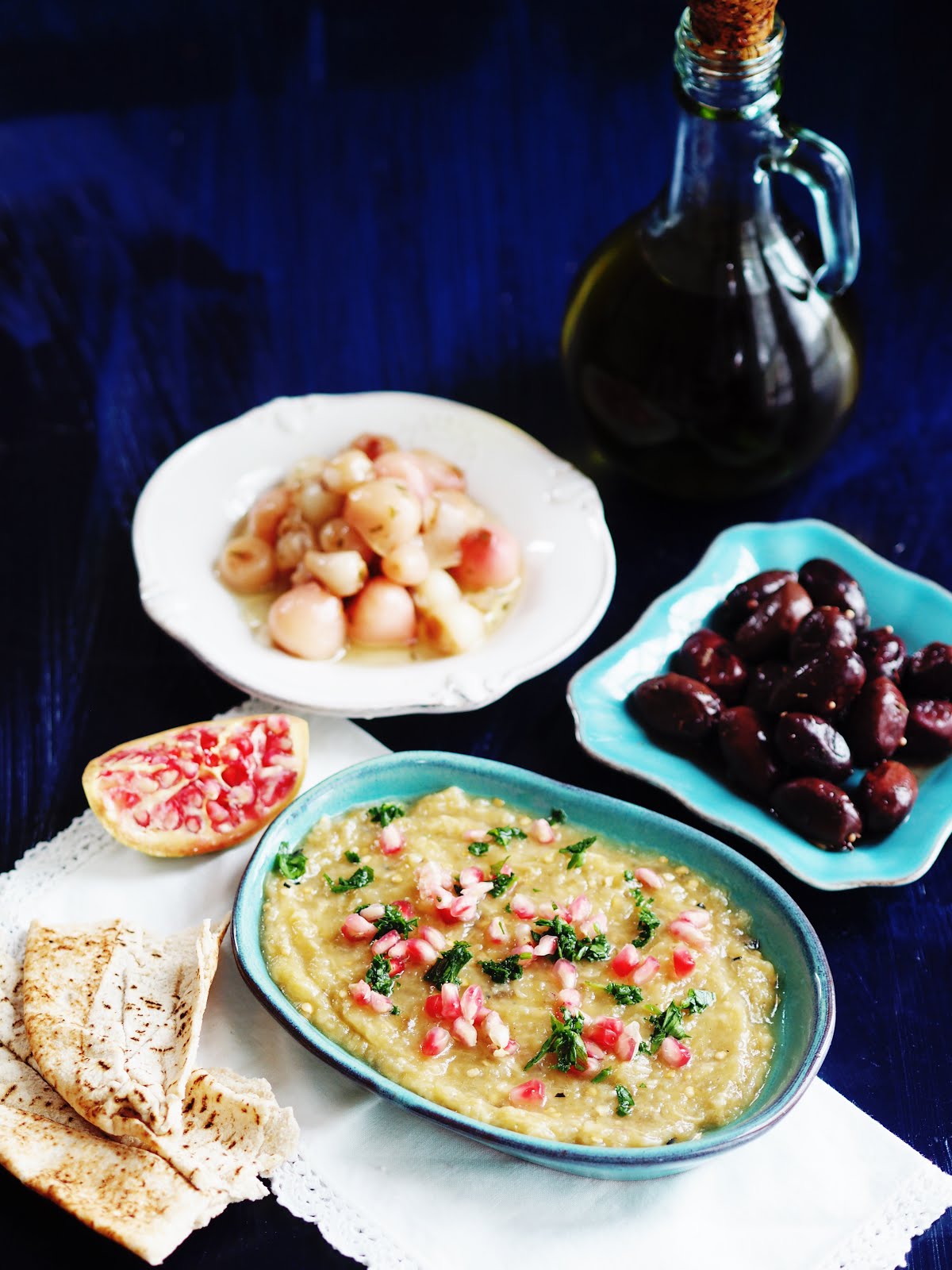
There are about a thousand different recipes for Μελιτζανοσαλάτα (Melitzanosaláta or eggplant spread). From the Greek kitchen, but also from the Levantine, such as the famous baba ganoush, patlıcan salatası from Turkey, salat ḥatzilim in Israel and Kashk e bademjan in Iran. This Greek recipe differs from recipes in neighbouring regions as it does not usually include the addition of tahini or whey. It's all about the eggplant and just a few simple ingredients that make the eggplant flavour really shine.  The delicious smokiness of the char-grilled eggplant, combined with punchy garlic and grassy olive oil makes this dish of my favourite mezedes. It is also "fasting" friendly and a dish that can be eaten through the period of Great Lent in the Greek Orthodox tradition, where m eat and animal prod­ucts (cheese, milk, butter, eggs) and fish (meaning fish with backbones) cannot be consumed. A strict fast also rules out  olive oil and wine, which can only be consumed ...

Palm Sunday: Bakaliaro Bourdeto (Μπακαλιαρος μπουρδετο)

Image
Bakaliaro (Μπακαλιάρος) or salt cod, is hugely popular in Greek cuisine. None more so than on two days during Lent, the Annunciation on March 25th and then again on Palm Sunday. It also just happens to be one of Mr K's most favourite dishes, when it served batter-fried in crisp pieces with pungent, garlicky skordalia. You can find a recipe for this style of bakaliaro here . While fried bakaliaro is really delicious, this traditional "cucina povera" fish can also been enjoyed in a variety of other ways. For our Palm Sunday celebrations this year, I decided to forgo the fried affair and instead opted to try a traditional Ionian preparation for the salt cod, called a bourdeto. A bourdeto (Μπουρδέτο) is an Ionian style of cooking, most commonly associated with the Island of Corfu. It is said to hail from the Venetian word 'brodeto' meaning broth. In its most basic form, a bourdeto involves fish, slowly simmered in a fresh in tomato sauce with onion, garlic and spicy r...

Favokeftedes (φαβoκεφτέδες)

Image
Over the last few days, Mr K and I have been doing a little holiday planning, getting inspired for our visit to Greece this summer. While Mr K is planning our itinerary around sensible things like ferry connections and architectural points of interest, I have been guided by regional cooking traditions and specialty produce of Greece. So, having spent a few days reading about the famed yellow split peas of Santorini, called 'fava' (and not to be confused with broadbeans), I just had to get into the kitchen and make some Santorini inspired dishes. In this case a big bowl of traditional warming fava - a split pea puree and some favokeftedes, which are best described as a split pea croquette. I made this dish with Australian grown yellow split peas, which were excellent quality, but I can't wait to try this dish again in a few months time, with the fava grown on the spectacular Greek island of Santorini. Favokeftedes (φάβoκεφτέδες) Ingredients 250g yellow split peas 1 onion, ...

Greek pickled calamari (καλαμαρι τουρσι )

Image
I love making a range of Greek style pickles - called toursi (τουρσί) in Greek. They are especially great in summertime, when after a day spent at the beach you get that urge for a chilled ouzo and meze. It's so nice to know that you have little jars of toursi tucked away in the fridge or the pantry and the only effort required is opening the jar! The pickle recipe I am sharing today is for calamari toursi (καλαμάρι τουρσί). It makes for a great meze spread with a little feta dusted with riagni, some simple fava (a yellow split pea dip) topped with sweet red onion and capers - and a little fresh, crispy salad on the side, such as a purslane and marinated olives. Pop open the jar of calamari and in minutes you have some lovely mezethes to enjoy with a chilled ouzo in the garden on a warm, dusky summer evening. If you skip the feta you also have a Greek Orthodox fasting friendly meal for those few weeks before Christmas - or Easter. If you are interested in making other Greek style p...

Lenten salad with quinoa & pomegranate (Σαλάτα με ρόδι και κινόα για τη νηστεία)

Image
Autumn makes herself known when the soft orange-pink pomegranates start to appear on my father in law's trees, like spectacular Christmas ornaments. It marks the start of one of my favourite seasons and always reminds me that my wedding anniversary is not too far away. I can always remember my dad and my father in law enjoying a very happy, animated conversation and a Greek coffee in the garden with an impressive backdrop of pomegranate trees, that were simply heaving with fruit, behind them on the day after our wedding. My father in law took cuttings from his trees and now they grow in my parents garden - and this is the first year that the new trees have produced a very generous and healthy quantity of fruit that is filled with sweet ruby coloured gems. Lent stays with us for a few more weeks yet and the recent baskets of pomegranates from both of our parents has provided a good source of inspiration for our almost vegan diet. Indeed they were the star feature in this filling sal...

In my kitchen March: Octopus with thyme flowers and honey, with fava (Χταπόδι με θυμάρι λουλούδια και μέλι, με φάβα)

Image
In my kitchen this month, I am enjoying the rich bounty of late summer produce – tomatoes, zucchinis and eggplants from the garden. I am also very excited to be welcoming into my kitchen, over the coming weeks some spectacular autumn produce – figs, pomegranates, chestnuts and more! Thankfully, there are so many wonderful fruits and vegetables in season at the moment, as over the next few weeks the menus in my kitchen are going to be fasting friendly. As mentioned in my last post, we have just entered the Greek Lenten period of fasting, which is called nistia (νηστεία). In this day and age, many people do not follow a strict fast and there are different ways in which people fast. In our house, we will not be eating meat for the entire period of lent, and on Wednesdays and Fridays, we will be completely vegan – as well as olive oil and alcohol free. Given that we do not tend to eat too much meat generally, the fasting is not too tough. Although limiting our olive oil consumption is a bi...

Greek Lenten Traditions and Onion Pie (κρεμμύδoπίτα νηστεία)

Image
While Greek food is so much about the seasons and homegrown produce, it is also driven by the festival calendar. We recently started one of the most significant fasting periods in the Greek calendar, Great Lent. This period is called nistia (νηστεία) and traditionally requires you to abstain from meat, eggs, dairy, fish (shellfish are ok), olive oil and alcohol. You are also required to limit the number of meals consumed each day. In recent times, many people do not fast for the whole period of lent (Clean Monday until Easter Sunday) but they do still fast in different ways. For many people, they will not eat meat for the entire period of lent but will still eat dairy. For others, they will not eat meat for the entire period of lent and will also be completely vegan, oil and alcohol free on Wednesdays and Fridays - which are regarded as significant fasting days in the Orthodox calendar year. In addition to this, most people fast strictly during the first and last week of Lent as well a...