Posts

Showing posts with the label soup

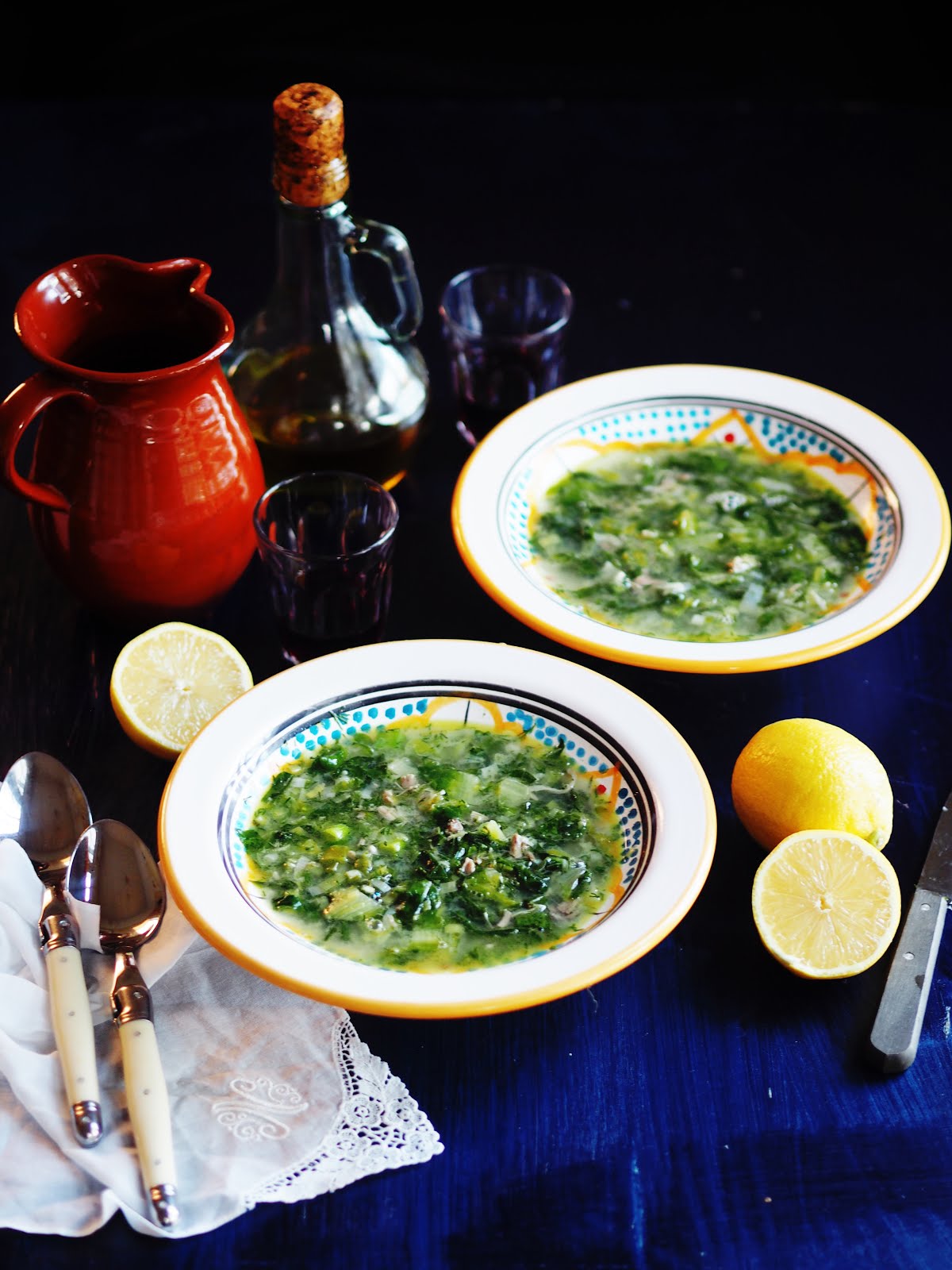
Magiritsa (μαγειριτσα): Greek Easter Soup
Image
Magiritsa (μαγειρίτσα) is the traditional soup eaten early on Easter Sunday morning, following the midnight Divine Liturgy of the Greek Orthodox Church, to break the fast of Lent.  The soup is prepared on Holy Saturday and many families put the soup on a very low heat to cook, before they leave for church. Traditionally magiritsa is made with all of the offal from the lamb, which is spit roasted for the Paschal meal. The lamb offal is flavoured with spring onions, dill and lettuce. Rice is added towards the end of the simmering process and the stock is thickened with avgolemono. Accompaniments to this dish sometimes include the red, hard boiled eggs, salad, cheese and the Easter bread, tsoureki.  I grew up in a household where offal was a rarity, eaten only very occasionally at my grandparent's houses, my mum being more of a pescatarian (although not strictly). My first taste of traditional magiritsa came at my parents in law's home at Easter. It was absolute...
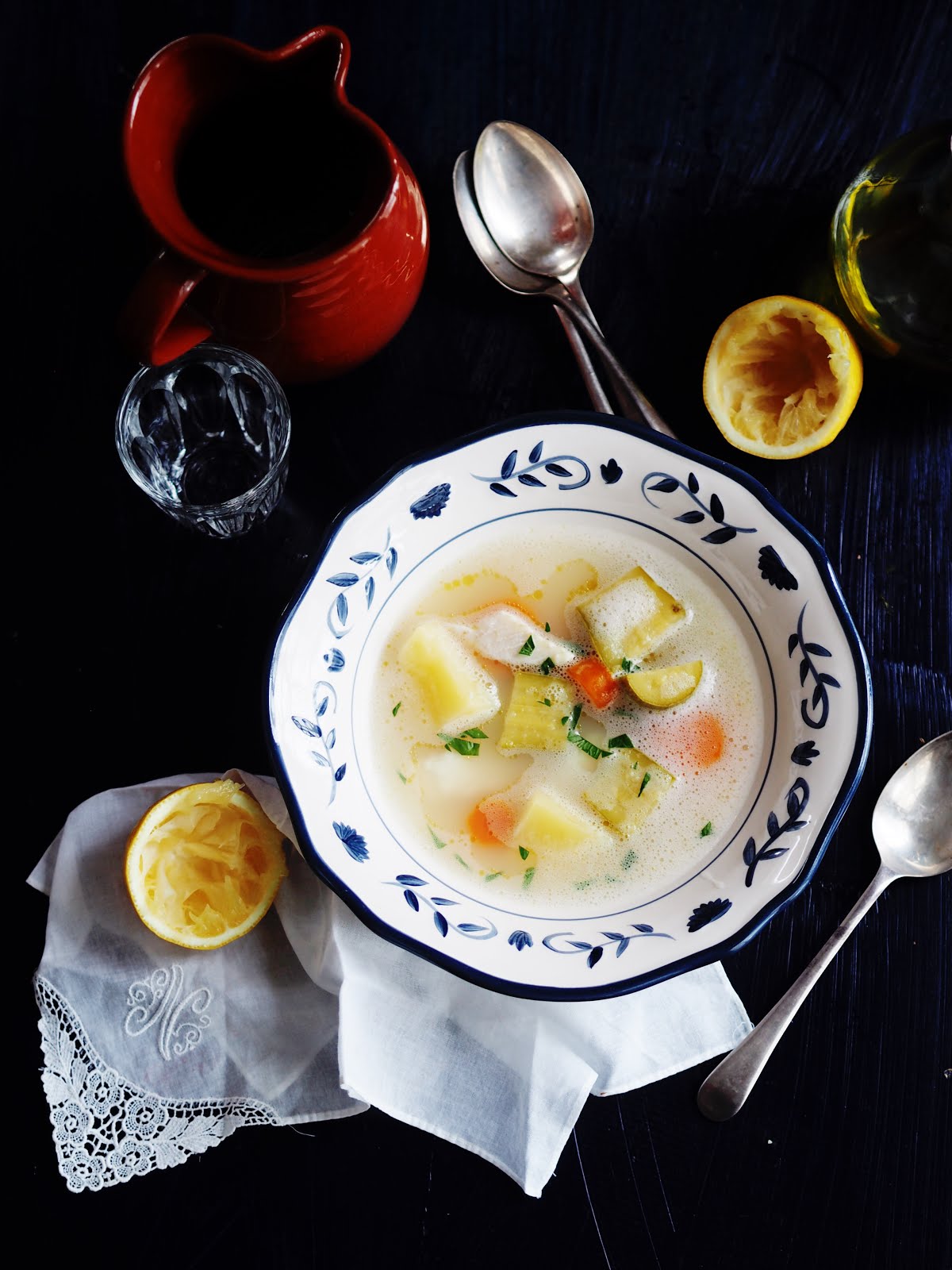
Mum's fish soup with avgolemono (Ψαροσουπα αβγολεμονο | ΣΥΝΤΑΓΕΣ ΜΑΜΑΣ)

Image
One of the most loved home style Greek recipes, psarosoupa (fish soup) is a perfect dish for those cooler autumn nights that are coming our way here in Australia.  Mum's recipe starts with a simple vegetable stock, which uses plenty of celery leaves in lieu of the Greek grown herb 'selino'. If Ma were in Greece she would use selino, the wild celery, that is both a herb and a vegetable. It has much thinner stalks than our ordinary celery and more leaves. Hence, Ma's use of plenty of celery leaves in this dish.  Once the vegetable stock is created, the fish is then cooked in the stock. Ma's fish of choice here in Australia is snapper, but you could use any fish with firm white fillets. The odd red mullet (called barbounia) can also be added. Before the fish is cooked however, Ma's secret for perfect fish soup is to scrupulously clean the fish. They should be cleaned to the point where, when they are placed under a running tap, the water runs clear and is not cloud...

Cooking with Tselementes: chick pea soup (ρεβιθόσουπα)

Image
There is one book common to all the kitchens of Greek women who migrated to Australia in the 1950s and 1960s. That is a book known just as, "Tselementes".  Nicholas Tselementes was well known chef, who trained and worked in some of the finest kitchens in Europe. In 1910, he wrote the first ever Greek Cookbook, which became every Greek housewife's cooking bible. The reason why so many Greek migrant women sought out a highly prized copy of Tselementes has been speculated upon by many food writers, some consider it was symbolic of the growing sophistication of Greek migrant women. On her wonderful blog, " Organically Greek " Maria writes of her own mother's experience in New Zealand,  "...Cookbooks were unknown to her until she migrated...Suddenly it seemed that a cookbook was indispensable. It was as necessary as, as, as sandblasted ballerinas on concertina glass-panelled doors separating the lounge from the dining room, china figurines on the mantelpiece...

Fasolatha (φασολάδα): national food of the Greeks

Image
You say tomato....I say fasolada, fasolatha, fasoulada or sometimes fasolia. Whichever way you say it, this meat-free soup of dried white beans, olive oil, and vegetables is called the "national food of the Greeks". A year or so ago, I posted a recipe for 'slow cooker' Fasolatha. In this post, I am sharing the recipe for the traditional stove top and a big pot method. This dish is said to have originated in ancient Greece and it has a counterpart in Turkish cuisine (kuru fasulye) and can also be found as fasoulia in Saudi Arabia, Iraq, Egypt, Yemen and the Levant. Within Greece, recipes for Fasolatha are regional and considerably different. One thing most recipes share in common is that the soup is enriched with a good amount of olive oil. This dish is a perfect winter warmer and a great option for a comforting weekend cook-up. Traditionally, pickled hot peppers or vegetables (called toursi), olives (and sometimes a little cheese) are served on the table alongside thi...

Chicken Youvarlakia with Avgolemono (κοτοπουλο γιουβαρλακια με αυγολεμονο)

Image
There has been an outbreak of man flu in our house. The only way to contain the outbreak and bring a little warm cheer to the house (especially with the heavy relentless rain in Sydney this weekend) was with this delicious soup. 'Youvarlakia' is made with little herb, rice and vegetable filled meatballs, warming home made chicken broth and nourishing avgolemono (egg and lemon sauce). Normally the meatballs are made with beef, however I like to make a variation using chicken - so much so that this soup is very similar to the traditional kotosoupa avgolemono, but with meatballs instead of shredded chicken. In some regions of Greece, this soup is made using a tomato base - but I am a much bigger fan of the avglolemono version, which works so well with the fresh dill in the meatballs. Chicken Youvarlakia with Avgolemono (κοτοπουλο γιουβαρλακια με αυγολεμονο) The meatballs 500gr ground chicken ¼ cup rice 3 tablespoons of olive oil 1 small carrot, grated 1 medium onion, grated 1 tabl...

Trahanasoupa (σούπα τραχανά)

Image
From one traditional Greek soup, to another! I do seem to be on a little bit of a soup theme this week. Perhaps it was the rainy weather that finally arrived, after such a long, dry, blue-sky winter. Don't get me wrong, I'm not complaining about the rain. It is going to do wonders for my garden - particularly the recently planted artichokes and broad beans. What is more, rainy weather accompanies a great big bowl of Trahanasoupa (σούπα τραχανά) perfectly. Trahanosoupa is a simple soup made with sour trahana. Trahana is classed as a sort of "couscous/pasta" and is an ingredient is not much known beyond Greek households. It is made from cracked wheat which has been soaked in milk and then (traditionally) dried in the sun. There are two types of trahana: sweet, and sour. Sour goat's milk, buttermilk or yoghurt is used for the sour trahana. You can buy trahana from Greek delicatessens and some fruit and vegetable shops also sell it. If you are feeling very ambitious y...

Greek Lentil Soup, Fakes Soupa (φακές σούπα)

Image
This soup is another dish, common to all Greek homes. Growing up, this soup was on the table almost every week in Mr K's house, especially during Lent. When I first heard it pronounced "fah-KESS" I had to do a double take, as I thought Mr K was swearing! Little did I know, he was just taking about lentils. Although, I have to admit - while I've been working hard to learn more of the Greek language, this word still makes me giggle. I absolutely loved this soup when Mrs K first made it for me to try. It is such a hearty and flavoursome dish, I didn't believe Ma when she said it just included the lentils, water and three things - onion, garlic and bay leaves. It has no meat or stock, yet you could be forgiven for thinking it did. The true flavour of the dish comes from the lentils and the aromatics of garlic, onion and bay leaves. It is just another fantastic example of how healthy traditional Greek home food is, and why the Mediterranean diet is so good. Since first...

Feasting while fasting: Revithosoupa (ρεβιθόσουπα)

Image
The Lenten fasting season has started. In our house it was marked by Mr K asking, "do you know how to make fassolada?" During Greek Orthodox lent, you are supposed to supposed to avoid animal products (meat, dairy, fish) until Easter. The only animal products allowed are shellfish, octopus and calamari. Tahini is used as a source of fat. The traditional fasting rules also do not allow the use of olive oil and wine during the week and only on the weekends one can consume them. As such, many stovetop dishes are cooked, which usually have lots of legumes, wild greens, vegetable and pasta or rice. Hence Mr K's question, about the all important fassolada - a hearty soup with lots of beans and vegetables. I was a bit confused about where to start with making fassolada. All the books I had read and recipes I had collected on our recent trips to Greece suggested that fassolada was made with white beans. Mr K was fairly insistent that it was made with chickpeas. Luckily, I had pla...

Revithosoupa… Chickpea soup.

Image
Revithosoupa… Chickpea soup, easy to make, healthy and hearty. One of the reasons I believe Greek food is among the healthiest cuisines on the planet, is a simple recipe like this… The earthy goodness and nutritional value of this dish makes its own case. For those of you who are vegetarians or for those who are trying to cut back on meat consumption, this dish provides a heart healthy and hearty alternative to more common legume/bean soups. Canned or dried chickpeas can be used for this recipe. If you are going to be using dried chickpeas, make sure to wash and soak them overnight so as to soften them up and prepare them for cooking. Also, make sure to rinse the soaked chickpeas well before using them (this applies to the canned varieties as well). Recipe: 1 lb. (½ kg.) of chickpeas 2 finely chopped onions 1 cup (250 ml.) extra virgin olive oil Juice of 1 lemon 1 tsp. (5 ml.) dried Greek oregano Salt and pepper to taste *optional: several strands of Greek saffron 1. Heat oil in a...