Posts

Showing posts with the label Meze

Gigandes plaki (γιγαντες πλακι)
Image
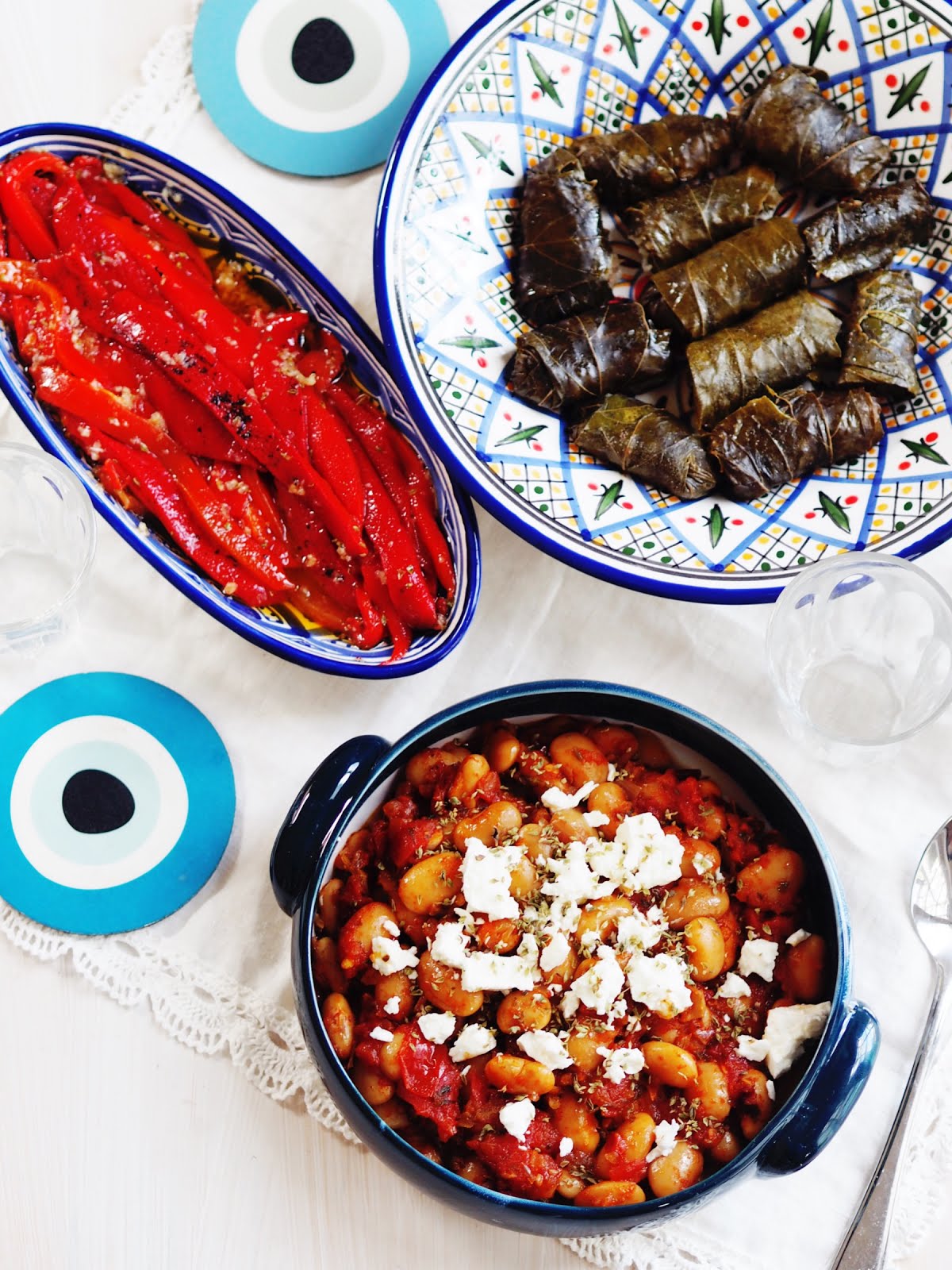
A variety of beans are used in Greek cooking. Small beans, such as haricot beans are used in fasolada soup or chilled summer salads. However, giant white beans, known as 'butter beans' in English are the sole contenders for being baked in the oven in a classic dish called "gigandes plaki " also spelled gigantes or yigandes (γίγαντες πλακί). While many there many different regional recipes for this dish, most commonly the beans are first cooked in water to soften them and then baked in fresh tomato sauce with carrots and celery. In some areas, particularly in northern Greece, a more hearty winter version of the dish calls for spinach, sausage or even spicy whole chili peppers to be added. In our family, my mother in law's Zakynthian origins shine through in this recipe with a classic Ionian style freshly grated tomato sauce, flavoured with plenty of parsley and garlic. You can reduce the amounts of these in the recipe if you prefer a more mildly f...

Melon and feta salad (Σαλατα με πεπoνι και φετα)

Image
A change from the usual watermelon, this super quick, cooling summer meze uses melon. Any type of melon works for this recipe too - depending on the season. As this salad is really quick to throw together and very simple, it does rely on having an absolutely ripe melon that is full of flavour. If there is no aromatic scent from the melon - choose another one! A spicy but smooth Greek feta, made from a blend of sheep and goat's milk is also important for this dish. The piquant saltiness of good Greek feta works so well against the sweet melon. However, the success of this dish depends on a really good quality black pepper, freshly ground, and a very peppery, green young olive oil - any extra expense will be worth it! Serve outdoors on a warm summer night as a simple starter or along with a few other small  mezedes, accompanied of course by a very chilled glass of ouzo.  Melon and feta salad (Σαλάτα με πεπόνι και φέτα) Serves 6 Ingredients  1 ripe melon (honeydew or rockmel...

Stuffed zucchini blossoms: the stove top method (Κολοκυθοανθοι γεμιστοι)

Image
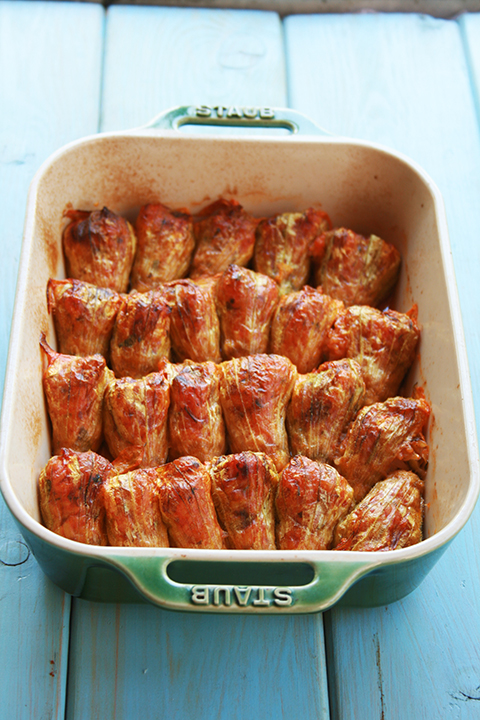
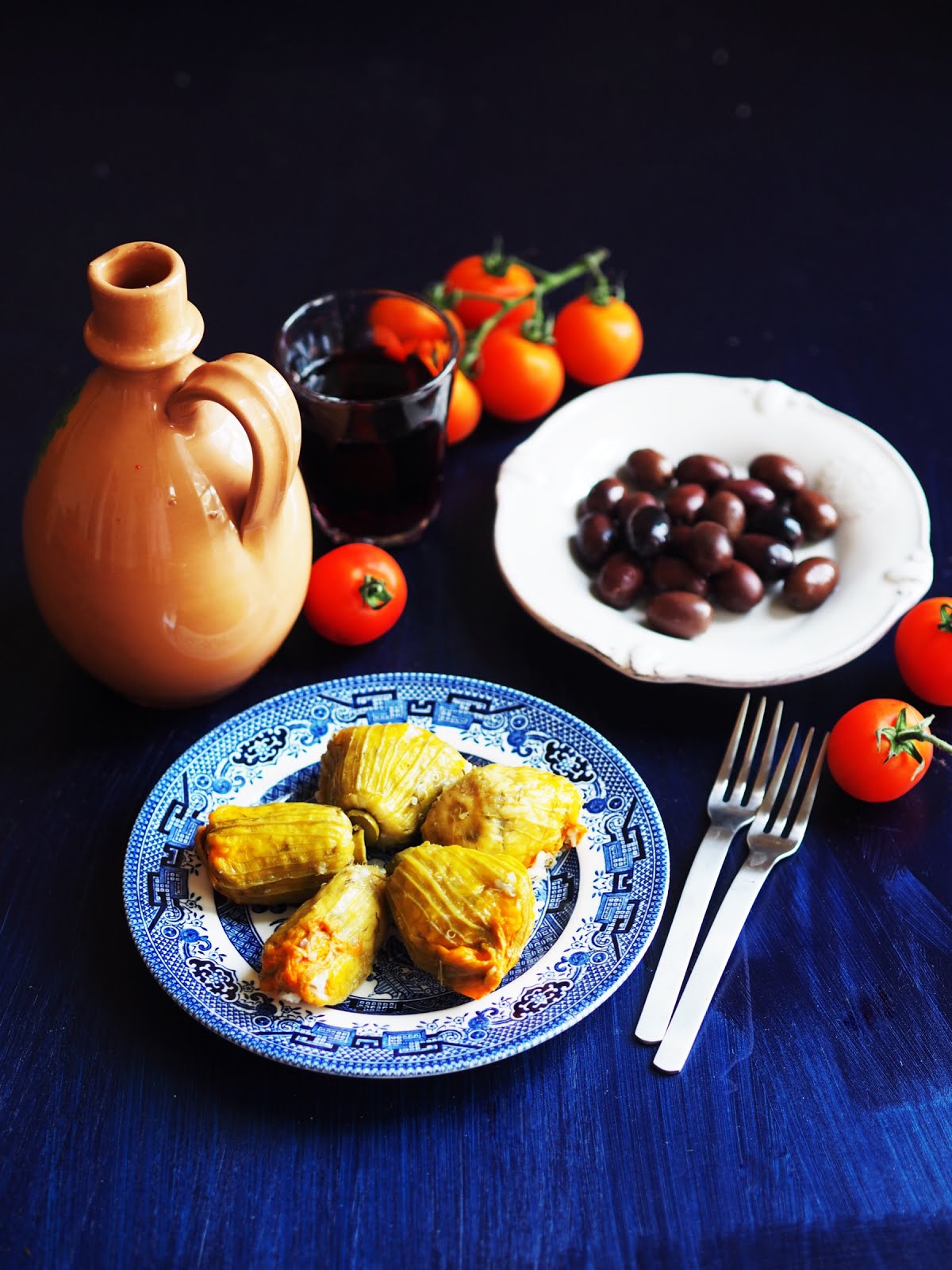
As soon as summer arrives, my cravings for stuffed zucchini blossoms begins. Stuffed zucchini blossoms are a summer staple dish in many Greek homes. They are incredibly delicate and have a subtle flavour, taking well to aromatics such as fresh herbs and lemon or for a more spicy approach, fresh grated tomato and smoky bukovo chilli flakes. There are two ways in which the blossoms are traditionally prepared in Greece; either via a stove top method or baked in the oven. Both ways of preparing the blossoms is delicious and usually really comes down to how you were taught by your mother or grandmother. In this post, I'm offering the stove top method and a follow up post will feature the baked method! While zucchini blossoms are relatively cheap and easy to buy at markets in Greece, the same is not true in Australia. Although, they do make an appearance at some of our farmer's markets and are of high quality, the blossoms are o...

Watermelon, feta and chilli salad ( Σαλατα με καρπουζι, φετα και πιπερια τσιλι)

Image
I can't imagine summer without chilled watermelon, its fresh cool juice and crunchy edges. During our summer in Greece last year, every market we visited from Athens to Naxos had stalls selling huge watermelons, all piled up into pyramids or towers. Driving in the country side, there were trucks pulled over on the side of the road selling the hot pink and green fruits - the infamous summer kapouzi was inescapable!  When the weather is so hot that you can't even face cooking, this salad is perfect. The watermelon is tossed together with salty Greek sheep milk feta cheese, mint and Thai basil leaves, sweet red onions and a little hit of chilli. It's best served really chilled, so you can prepare the salad and leave it in the fridge - just add the herbs and pour over the olive oil and toss before serving. It's just like a Greek summer on a plate!  Watermelon, feta and chilli salad ( Σαλάτα με καρπούζι, φέτα και πιπεριά τσίλι) Serves 4; preparation time 15 mins  Ingredients...

Broad beans fried with ouzo (κουκια τηγανητα με ουζο)

Image
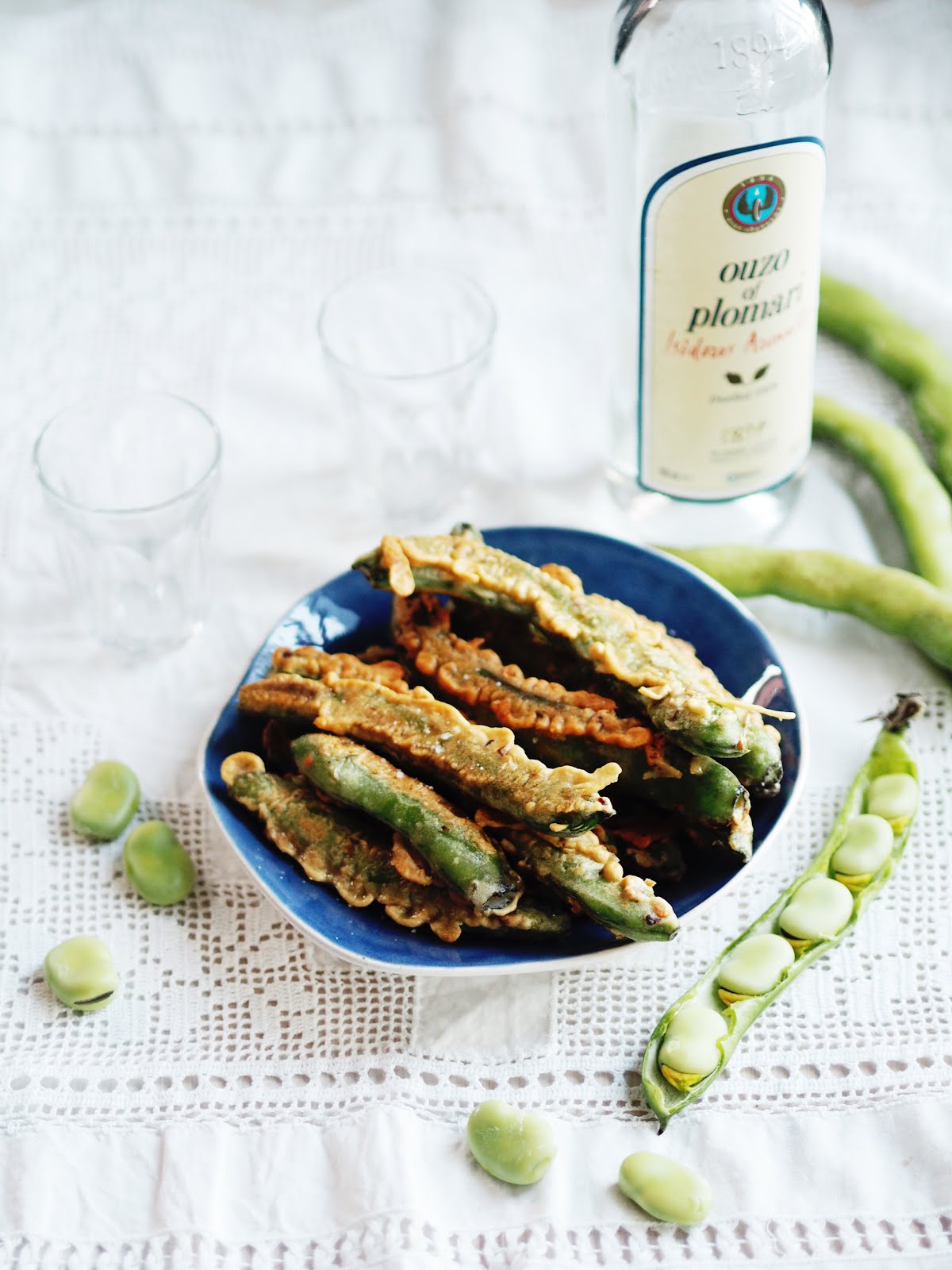
While artichokes will always remain my true love of springtime, broad beans come a very close second. This recipe is inspired by my father in law, who while working as a grocer in his store in Dulwich Hill would often make himself a quick lunch of flash fried young broad beans in between customers. Ba would lightly dust the young tender broad beans in seasoned flour and fry in Greek extra virgin olive oil (EVOO). He says this quick lunch reminded him of the ones his mother, Ekaterini, would make when he was a young boy in his family villaged, called Diasella,  in the Peloponnese.  My twist to the recipe is to enrich the batter a little and add a dash of ouzo. This makes a great light springtime dinner, with a little smoked trout or (for the more robust taste buds) Greek herring called Renga (Ρέγκα) and some punchy, garlicky skordalaia. This light spring time meze is best accompanied by a chilled glass of ouzo. Broad beans fried with ouzo (κουκιά τηγανητά με ούζο) Serves 4...

Dolmades with swiss chard, aggourida and quinoa (ντολμαδες με σεσκουλο, αγουριδα και κινοα)

Image
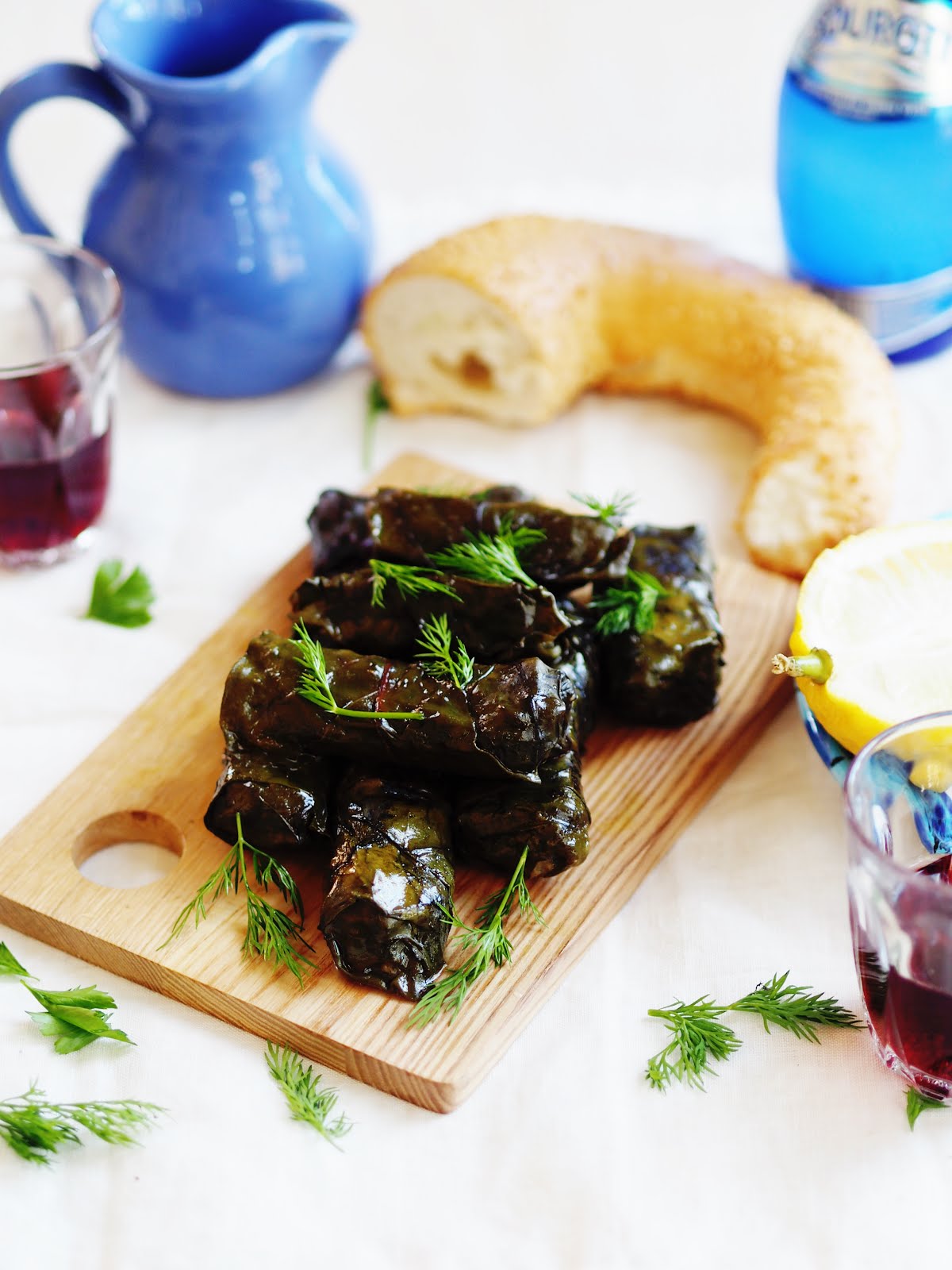
Surprisingly, 'swiss chard'  isn't native to Switzerland. It’s homeland is the Mediterranean and it has been a revered vegetable (particularly for its medicinal qualities) since Ancient times. The Greek philosopher, Aristotle wrote about chard in the fourth century B.C. Today, swiss chard continues to be a much loved vegetable on the Ionian island of Zakynthos, where it is known in the local dialect as ‘seskala’. In the rest of Greece it is  referred to as seskolo. The Zantiots prize the flavour of seskala, which is similar to spinach, but with a stronger, more assertive (some think, bitter or earthy) flavour. The fantastic variety of phytonutrients in seskala is quickly recognizable in its vibrant colours, from the rich dark green leaves to the rainbow of reds, purples and yellows. Sekala is rich in vitamin K, A, C as well as iron, magnesium, potassium, and manganese. It also has lutein, shown to help with eye health. Although seskala is available throughout the...

Feta, rigani and garlic dip with homemade pita bread

Image
If you need a quick meze when entertaining, that requires minimal effort but has maximum effect, then this is a recipe for you.  This simple, delicious feta, rigani and garlic dip hails from Kefalonia.  The last time we stayed on the island, we bought it in simple little terracotta tubs from the local 'Galaktopoleio'. I love the fact that Greece still has speciality stores instead of only homogeneous supermarkets. The Galaktopoleio, is dedicated to selling milk and dairy products - plus the odd carton of eggs and it is where you can find treats like this! I make a milder form of this dip, in Kefalonia the version at the galaktopleio had been left to mature for a little while and the cheese was very sharp and pungent.  Like with all Greek food, the success to this easy dip is using very high quality ingredients. Make sure you buy good quality Greek feta cheese, made with sheep or goat's milk and aromatic rigani from Greece. In this dip, I used some more of the wonderful ra...

Naxiot style octopus & vegetable pickle (χταποδι τουρσι)

Image
Naxos is well known for its incredible culinary heritage and its reputation rests largely on the amazing produce of the island. This super easy to make meze, which hails from Naxos, can be easily recreated outside of the island, with produce from your local farmers market. We enjoyed this meze in Naxos recently ( you can read more in my guide to Naxos ). The recipe comes from a small fisherman's taverna, which sits right on the main ferry port. It was the perfect start to a leisurely evening meal, accompanied by a very chilled ouzo, set against the spectacular backdrop of the sun setting over Naxos' famous Porta. This was one of those holiday dishes that was really going to stay in my memory and I just had to ask for the recipe. I could have seen myself back in Sydney regretting a missed opportunity if I had not asked. Luckily the taverna cook was more than happy to oblige and the recipe was shared, along with the secret tip to use plenty of fresh herbs - a common theme in much...

Favokeftedes (φαβoκεφτέδες)

Image
Over the last few days, Mr K and I have been doing a little holiday planning, getting inspired for our visit to Greece this summer. While Mr K is planning our itinerary around sensible things like ferry connections and architectural points of interest, I have been guided by regional cooking traditions and specialty produce of Greece. So, having spent a few days reading about the famed yellow split peas of Santorini, called 'fava' (and not to be confused with broadbeans), I just had to get into the kitchen and make some Santorini inspired dishes. In this case a big bowl of traditional warming fava - a split pea puree and some favokeftedes, which are best described as a split pea croquette. I made this dish with Australian grown yellow split peas, which were excellent quality, but I can't wait to try this dish again in a few months time, with the fava grown on the spectacular Greek island of Santorini. Favokeftedes (φάβoκεφτέδες) Ingredients 250g yellow split peas 1 onion, ...

Zucchini flowers, stuffed with rice, summer veggies, and herbs

Image
          Searching the Internet for some info on edible flowers, I saw some beautiful pictures of cakes and other fancy desserts decorated with, among other exotica, small blue and yellow pansies and chrysanthemum flowers. Did we always eat pansies on our cakes and in colorful salads or is it one more innovation from Noma (with its inventive kitchen) that has been immediately adopted by all of us?        Well, in fact, dried flowers have been used for thousands of years as spices in cooking or in herbal teas for medicinal purposes. Their use in modern cooking today as decorative edible ingredients is really a rebirth of this very old tradition.  Roses and zucchini- squash flowers have never stopped being used in cooking.       In Greece we make rose petal jam and we use zucchini flowers in different savory recipes.  When I was a child, whenever my mother made stuffed tomatoes, there would always be some sp...

Tyropitákia - feta and phyllo, mini cheese pies

Image
    When I was in college cooking was not my forte so, to save me from eating junk food, my mother would load my freezer with dozens of small homemade cheese pies (tyropitákia) for my meals. I would fry them for a few minutes straight from the freezer and immediately had a delicious, crunchy and flavorful snack, - a snack that I have not stopped loving ever since.  They are great with a glass of beer as a meze, or with some salad for a filling and fast meal, or as a handy snack at work or school. We serve them at the restaurant as a first course or for meze dishes.   Tyropitákia Makes about 30 mini cheese pies 6 phyllo sheets (thawed) 300gr  Feta cheese 2 eggs beaten Ground pepper to taste Olive oil, to brush the phyllo sheets  In bowl place the feta and crumble it with a fork. Add the beaten eggs and pepper and mix until you get a firm batter. Cut each phyllo sheet lengthwise into five strips, about 7cm each ( store bought phyllo sheets in Greece are ...

Eliópsoma – Kalamáta olives and thyme, bread sticks

Image
Lying at the head of the Messenian Gulf in southern Greece, Kalamáta is the second most populous city of the Peloponnese. This city is famous all over the planet for wonderful ‘’Kalamáta olives’’ which originated here and have been cultivated in the area for many centuries.  They are now protected under the European ‘’Protected Geographical Status’’ scheme. In Greece Kalamáta olives are mostly eaten as a snack, at branch or lunch, or as a mezedes for drinks, but they are also used in cooking some regional stews and, of course, in olive breads. From time to time my mother would make sourdough olive bread for the family and she would also make some olive bread sticks for me; I have always loved their crust!  Since not everyone is familiar with sourdough, I will give you the yeast version which is, in my opinion, just as good. Olive bread sticks Makes about 10 bread sticks: 250gr all purpose flour, plus some for dusting  200gr tepid water 5gr dry yeast 5gr salt 1Tbsp olive o...