Posts

Showing posts with the label Greek traditions

Magiritsa (μαγειριτσα): Greek Easter Soup
Image
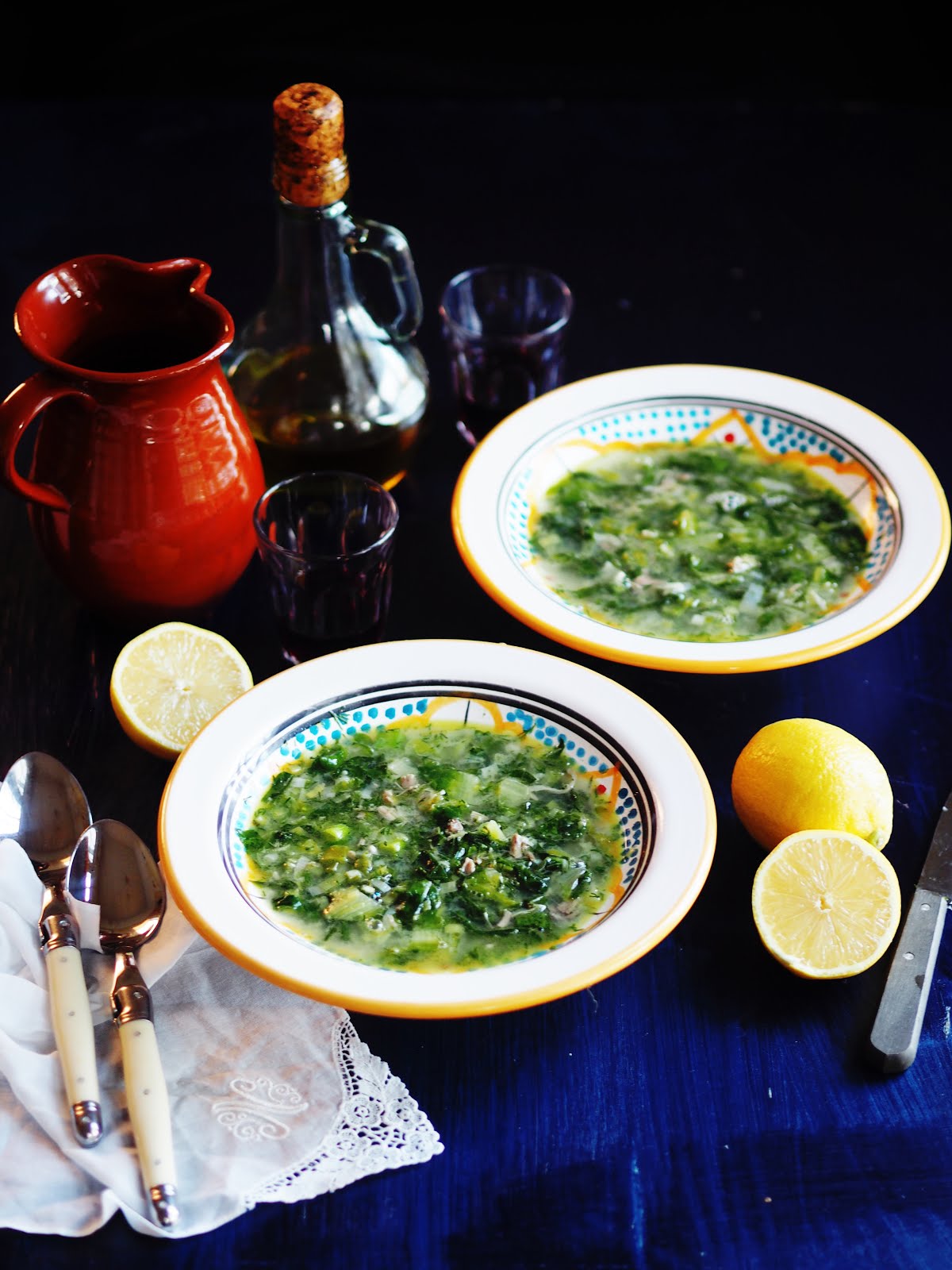
Magiritsa (μαγειρίτσα) is the traditional soup eaten early on Easter Sunday morning, following the midnight Divine Liturgy of the Greek Orthodox Church, to break the fast of Lent.  The soup is prepared on Holy Saturday and many families put the soup on a very low heat to cook, before they leave for church. Traditionally magiritsa is made with all of the offal from the lamb, which is spit roasted for the Paschal meal. The lamb offal is flavoured with spring onions, dill and lettuce. Rice is added towards the end of the simmering process and the stock is thickened with avgolemono. Accompaniments to this dish sometimes include the red, hard boiled eggs, salad, cheese and the Easter bread, tsoureki.  I grew up in a household where offal was a rarity, eaten only very occasionally at my grandparent's houses, my mum being more of a pescatarian (although not strictly). My first taste of traditional magiritsa came at my parents in law's home at Easter. It was absolute...
Gluten free Koulourakia with mastiha (Kουλουρακια με μαστιχα - χωρις γλουτενη)

Image
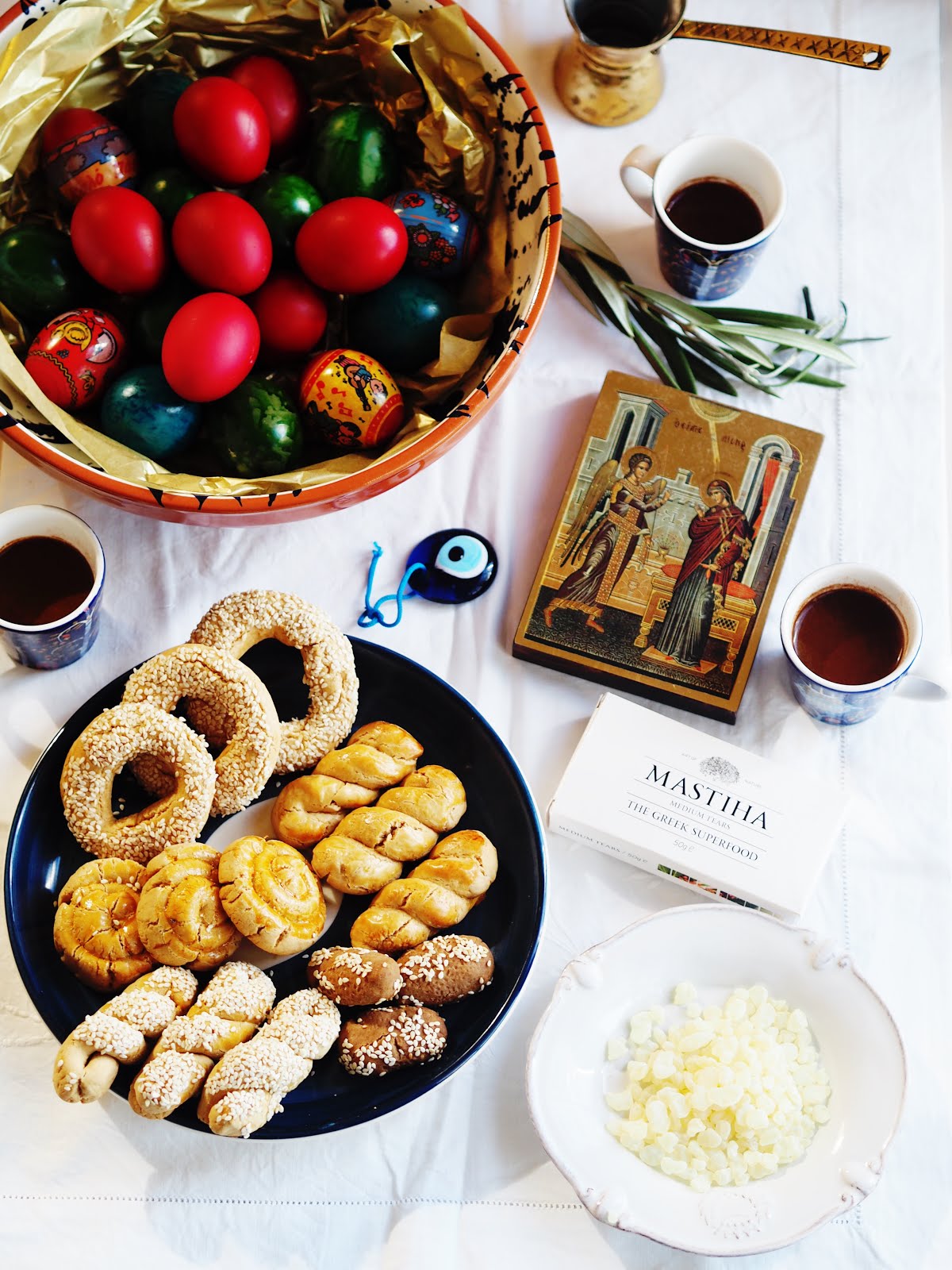
Easter remains the most important celebration for my Greek family. I love the traditions of colourful dyed eggs, tsoureki and  the Easter biscuits - Koulourakia. Holy Thursday has always marked the start of Easter preparations in our house, the day the eggs are dyed red and the  Koulourakia are made. For those in our family who are not friends with gluten, it seemed a shamed for them to miss out on part of the Easter traditions. So, this year, I have tried my hand at making some gluten free Koulourakia, flavoured with plenty of lemon, vanilla and the most incredible Greek superfood - Matsiha.    Mastiha are like little dusty pieces of crystal - which come from mastic-tree resin and are only found on the Greek island of Chios (I long to visit Chios one day - hopefully soon!).  Mastiha has been harvested on Chios for at least 2,500 years since Greek Antiquity. Mastiha is reported to have plenty of health benefits from  digestive issues to skin regeneration. I...

Traditional Preserved Green Olives (παραδοσιακες ελιες)

Image
In my education of all things Greek, this year (so far) has been the year of the olive. The Greek word for olives is elies, ελιές, pronounced el-yes and they are without question the essential element of the Greek diet. Olives can make the simplest mezede and every meal is accompanied by a plate of beautiful glossy olives on the table.  My father in law has over 70 years of experience growing olives and for the sixty years of their married life, my mother in law has preserved the autumn crop. Their home preserved olives really are a team effort. Living in a sunny corner of Sydney's inner west has not hampered my in law's passion for home preserved olives. So, a few weeks ago, Mr K and I were part of the small team of harvesters in the Autumn sunshine. As we sat picking the olives from the branches, Dad (Ba in Greek) recalled stories of how he had harvested olives with his family in a small village in the Peloponnese during the 1930s.  Ba tells me that the best, most tastiest, ...

Greek Independence Day: Salt Cod and Skordalia (Μπακαλιαρος σκορδαλια)

Image
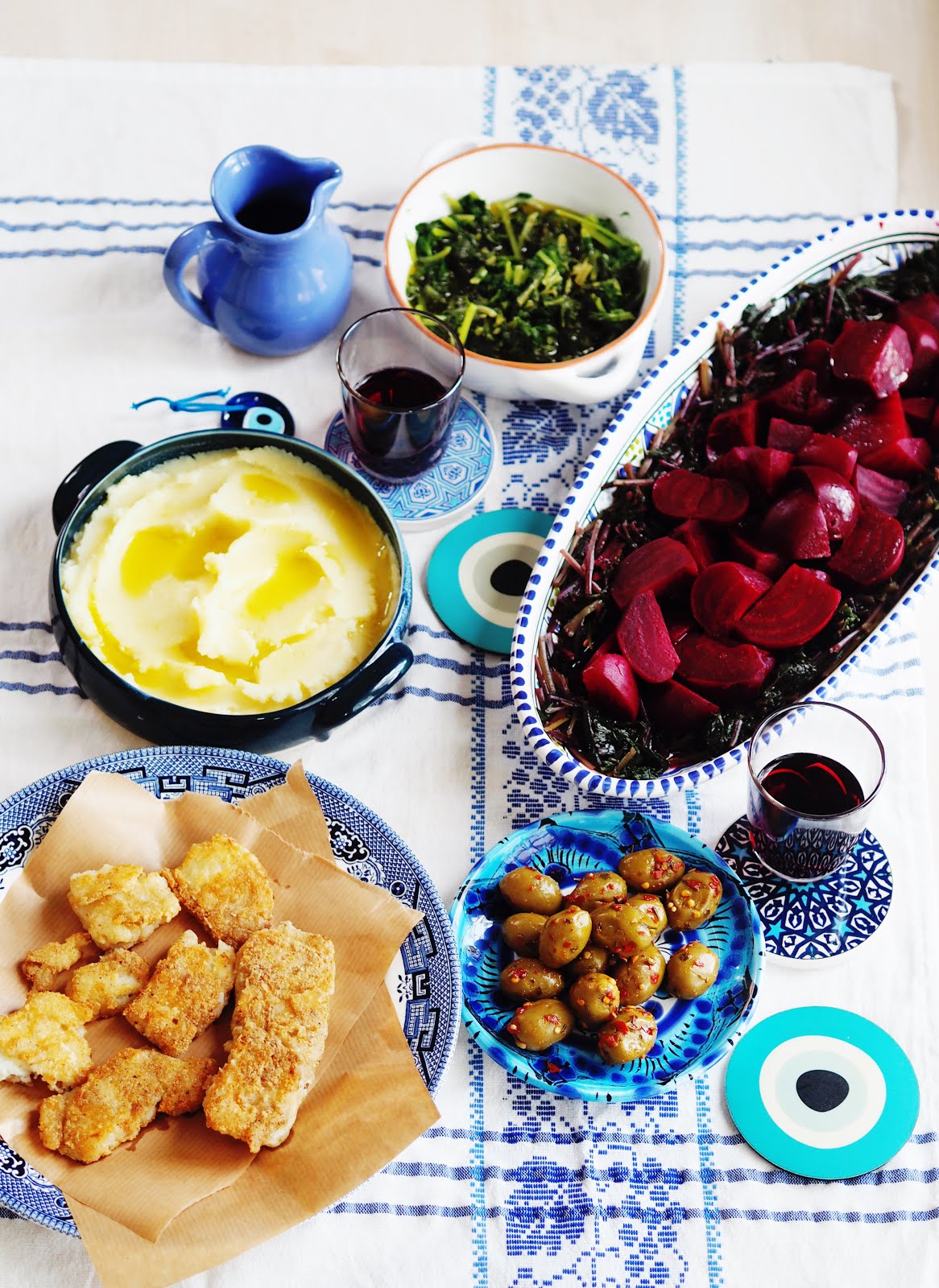
March 25 marks Greek National Independence Day and the Annunciation. While this day usually falls during lent it is the custom, allowed by the Church, to pause in fasting and eat fish. By far the most popular fish of choice on this day (and one of the pillars of Greek cuisine) is Fried Salt Cod Fillets accompanied by skordalia, a garlic spiked potato puree. A simple boiled beetroot salad (which includes the beetroot leaves) dressed in olive oil and Greek wine vinegar, is also a traditional side dish. While fried salt cod seems a simple dish, the Greek version of fish and chips, it is far from it. The crunchy coating of the cod, fried in olive oil, has a soft savoury inside - an addictive combination. Ordinarily, the dish is made with a fluffy beer batter ( you can find the traditional recipe here ). However, this year I decided to opt for a change and prepared the cod in with a lighter lemon zest and herb flavoured crust, using gluten free flour. Fried salt cod (Μπακαλιάρος) Serves 4;...

Ma's octopus pilafi (χταποδι πιλαφι | συνταγες μαμας)

Image
There is nothing my mother in law likes more, than to be in her kitchen creating food for her family. After a serious illness over the last few months, it has been wonderful to see Ma feeling just well enough again to be back in the kitchen doing what she loves best - cooking. When she is not cooking, then there is nothing more that we like to do together more, than talk about food and recipes. Yesterday, Ma shared with me two of her recipes, octopus pilafi, a traditional Greek Lenten dish and her own, more revolutionary (and certainly not traditionally Greek), chilli puree.  My lovely brother in law recently shared with me a story about Ma's discovery of chilli. It was about 20 years ago and after a period of experimenting, she hasn't looked back since! Ma loves chilli for its reported health benefits as well as the heat and flavour it brings to her dishes. However, as it is not a traditional Greek ingredient, Ma uses it sparingly in the form of a milder chilli puree made from...

Fanouropita (φανουροπιτα)

Image
A 'Fanouropita' (φανουροπιτα) is a cake that is traditionally made in Greece to honour Saint Fanourios, patron saint of lost things, on August 27th. The Saint's capacity to help find something lost is suggested in his name, in the Greek language, φανερώνω (fanerono) means reveal. In seeking the intercession of the Saint, for something lost, the Greek people will take their baked caked to the village church to be blessed. Then it is shared among the congregation. As such, whoever made the cake is supposed to be given hope that whatever they have lost may be found.  The cake itself is vegan and flavoured with olive oil, cinnamon, cloves and orange. It a sort of Greek version of gingerbread (albeit, without the ginger). Tradition requires the cake to be made with 7 or 9 ingredients and it must contain  fruit and nuts, so that you are able to "find" something while you eat the cake.  Fanouropita (Φανουρόπιτα) 4 cups self raising flour 1 & 1/2 teaspoons of ground...

Easy homemade fresh mizithra (μυζηθρα)

Image
In a few of the recipes I have posted recently, I have used mizithra cheese. Mizithra is an incredibly popular cheese in Greece and it comes in both dried and fresh versions. In Greece, mizithra is made from either goat, sheep or cow’s whey to which whole milk is sometimes added. Mizithra is one of the simplest cheeses to make: milk is brought to a slow boil for a few minutes and then curdled by adding rennet or whey from a previous batch or an acidic substance such as lemon juice, vinegar or - in some cases, a fresh broken sprig from a fig tree. As soon as curds have formed they are poured into a cheesecloth bag and hung to drain. The whey dripping out of the bag can be used to curdle the next batch of mizithra. A fresh chalky white colour, this slightly sweet cheese is perfect with honey, fruit and nuts. It is also used to fill all manner of small pies, such as the kalitsounia of Crete. The fresh version of mizithra cheese may also be salted and hung to dry from cheese cloth, in the ...

Cooking with Tselementes: rizogalo (ριζoγαλο)

Image
It would be safe to say that Rice Pudding is an ultimate comfort food around the globe. Nearly every culture has their own variations on this luscious, nursery-food style treat. In Mr K's family home, when treats were on offer - they often came in the form of Greek rice pudding, called rizogalo (ριζόγαλο). Rizogalo is a creamy, mouth-filling delight of sweetened rice, full cream milk and the subtle flavourings of cinnamon and lemon. When served warm, it is rich and comforting - like a big sweet hug in a bowl. Perfect in Autumn when the weather starts to become a little cooler. But when the weather is warmer, rizogalo is equally good served cold. Despite it's carby underpinnings, served cool rizogalo is surprisingly refreshing, especially when dusted with an extra large dose of cinnamon. A few weeks ago, I posted a recipe from the holy grail of Greek cooking, Tselementes. In that I post, (which you can under the "Tselementes" tag on the recipe index page opposite right...

Citrusy Ionian Style New Year Cake - Vasilopita (Βασιλoπιτα)

Image
As 2015 comes to a close,  I am so thankful to all who have taken an interest in this little blog over the last year. It is so wonderful to be able to share something I love to do with you and I wanted to say thank you to those reading in Australia, Greece, Cyprus and all over the world. What better way is there to say thank you than by offering up some baking goodness?  In Greek homes, when the New Year arrives, it is also the feast day of St Basil (Aghios Vassilios) and it is traditional to celebrate the day with a "vasilopita" - a bread or cake which has a foil wrapped coin hidden inside. In this post, I am sharing with you the cake version - inspired by the flavours of the Ionian islands, with plenty of citrus and a little splash of brandy.  On New Years day, the family gathers around the table and the head of the household will make a sign of the cross over the bread or cake and turn it three times - once for the Virgin Mary, once for Christ and once for the house. A...

The field guide to Greek greens

Image
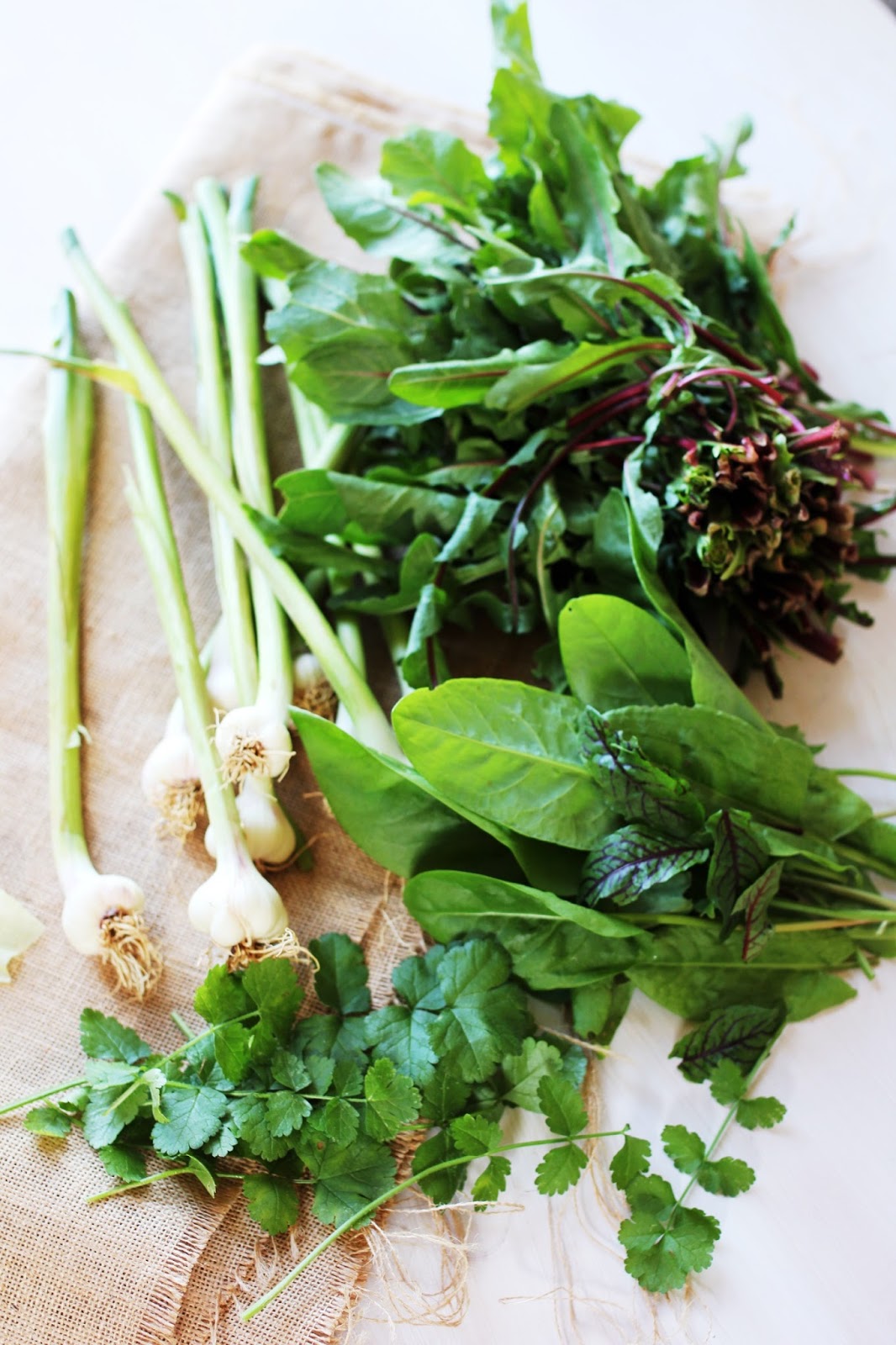
I would love to be able to spend hours foraging for wild greens – but it is a time-consuming activity and you MUST have someone with you (preferably an older Greek person) who can properly identify what is what, so you don’t end up serving something potentially poisonous in your spanakopita! To alleviate my foraging anxieties (and to learn more), I have started to grow many ‘wild’ greens from seed in my garden – the seeds being the (well identified and home cultivated) gifts of my Greek parents-in law, their family, cousins and friends and my lovely Italian neighbours - or the sellers noted below.  Another good starting point has also been frequenting local grower’s markets to learn more about the wild greens being sold. In Australia, wild greens are growing in popularity at farmer’s markets and you can now easily buy a range of seasonal greens from dandelions to mallow leaves. In Greece, at the laiki (local street market) you will always find an abundance of wild greens on display...

In my kitchen June: crab apples, quince, chestnuts and jerusalem artichokes and Glyko Kythoni (γλυκό κυδώνι)

Image
Winter's harvest has arrived in my kitchen this June and it has bought some of my favourite cool weather ingredients: crab apples, quinces, chestnuts, pine (or saffron milk cap) mushrooms and Jerusalem artichokes. In my kitchen this month... There is as basket of beautifully fresh pine (or saffron milk cap) mushrooms from Orange in NSW, which I bought from my local market. Winter is definitely the season for wild mushrooms (even though we have, in Australia, a wonderful year-round supply of cultivated mushrooms). I love the meaty texture and earthy flavour of these pine mushrooms - they were perfect for a meat-free ragu, to sit atop some rich truffle polenta, which I bought back home from a trip to Italy. Mushroom ragu and truffle polenta For the ragu: Cloves of garlic, roughly chopped – to taste (I used about 6 medium cloves) 150g saffron cap or pine mushrooms, sliced 200 g Swiss brown mushrooms, sliced 20 g butter 1 tablespoon dried Greek organic thyme leaves (see homerst.com.au)...