Posts

Showing posts with the label dairy-free

Mum's fish soup with avgolemono (Ψαροσουπα αβγολεμονο | ΣΥΝΤΑΓΕΣ ΜΑΜΑΣ)
Image
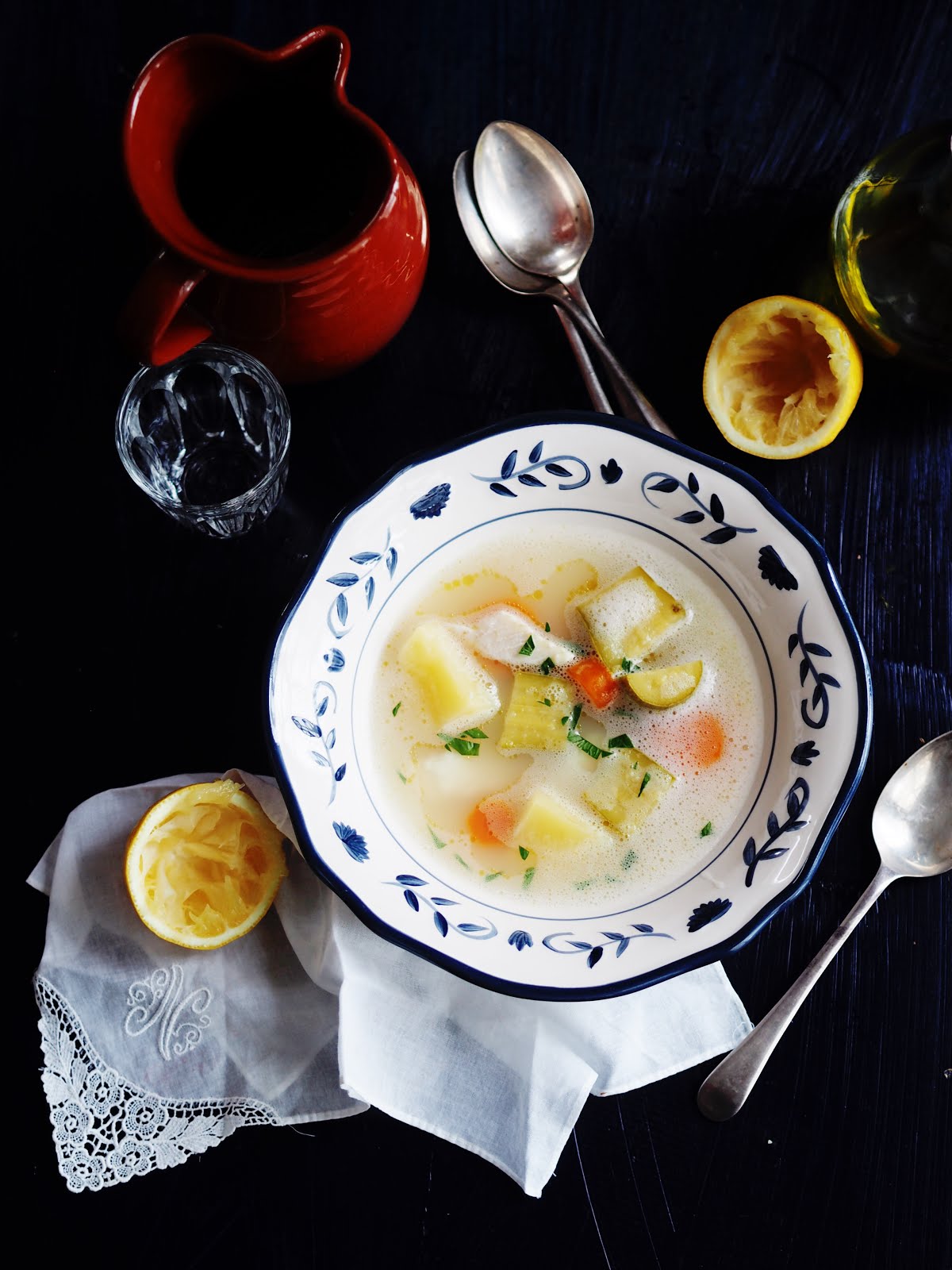
One of the most loved home style Greek recipes, psarosoupa (fish soup) is a perfect dish for those cooler autumn nights that are coming our way here in Australia.  Mum's recipe starts with a simple vegetable stock, which uses plenty of celery leaves in lieu of the Greek grown herb 'selino'. If Ma were in Greece she would use selino, the wild celery, that is both a herb and a vegetable. It has much thinner stalks than our ordinary celery and more leaves. Hence, Ma's use of plenty of celery leaves in this dish.  Once the vegetable stock is created, the fish is then cooked in the stock. Ma's fish of choice here in Australia is snapper, but you could use any fish with firm white fillets. The odd red mullet (called barbounia) can also be added. Before the fish is cooked however, Ma's secret for perfect fish soup is to scrupulously clean the fish. They should be cleaned to the point where, when they are placed under a running tap, the water runs clear and is not cloud...
Stuffed Vegetables with Quinoa (γεμιστα με κινoα)

Image
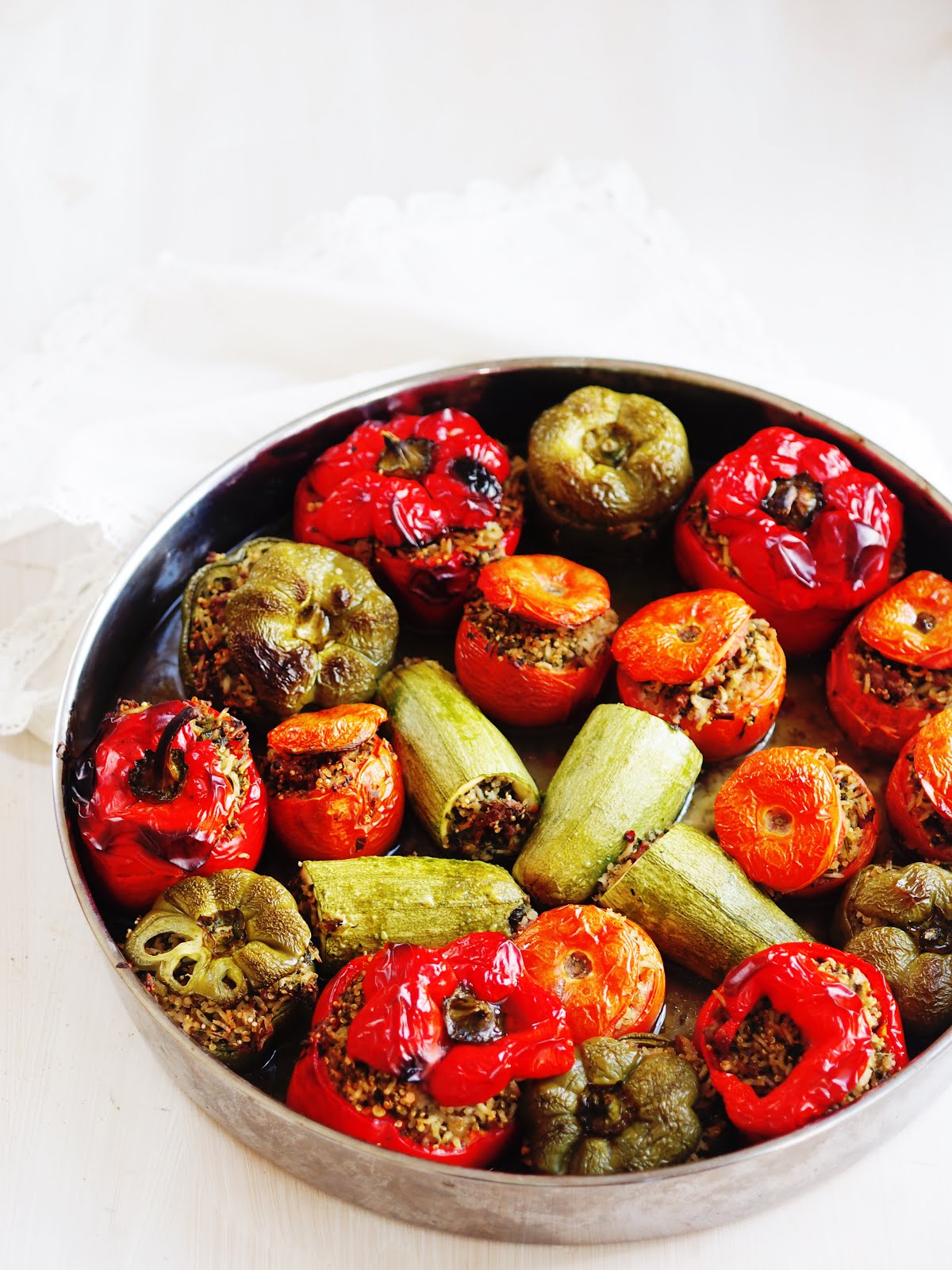
It is always nice to take a little twist on tradition every now and then. This week it was yemista's turn for a bit of a creative tweak. Instead of filling the peppers, zucchinis and tomatoes with the usual mix of white rice, I instead used some brown rice (for a hit of manganese & selenium) plus some quinoa for a little extra protein. The best addition to this recipe though was the fantastic Sparoza Mediterranean herb and spice blend, which uses a combination of 15 herbs and seeds from oregano and melissa to linseeds, mustard seeds and sesame seeds. The Sparoza spice blend makes this dish incredibly aromatic and I loved the fact that it makes the brown rice and quinoa filling even higher nutritional value with all those extra seeds. This spice blend has become a little bit of an addiction really. It makes for the perfect snack when added to a little toasted pita bread that has been liberally drizzled with extra virgin olive oil.   The real test for this twist on tradition came...

Prawn fritters (γαριδοκεφτεδες)

Image
These Greek prawn fritters are super easy to make and are the perfect kind of meze for spring days, as the weather becomes warmer. The most simple accompaniment to these fritters is a big squeeze of lemon and a chilled glass of rose wine - preferably Greek of course. However, if you have a bit of a party going on, the keftedes can be joined by some pickled octopus , dolmades and spicy feta cheese spread for a more substantial set of mezedes. What's more, all of these meze are gluten free, so they make a great option if you are catering for any one who is following a gluten-free diet. Greek prawn fritters (γαριδοκεφτέδες) serves 4; prep time 35 mins; cooking time 30 mins  600g fresh uncooked / green prawns, roughly chopped (use pulse option on a food processor) 1 small red onion, finely chopped 2 green onions/shallots, finely chopped 2 tablespoons of ouzo 1 tablespoon of fresh dill, finely chopped 1 tablespoon of fresh parsley, finely chopped 1 teaspoon of paprika 1 teaspoon of dri...

Fried garfish with cauliflower 'skordalia' (Τηγανητα Ζαργανα με κουνουπιδι σκορδαλια)

Image
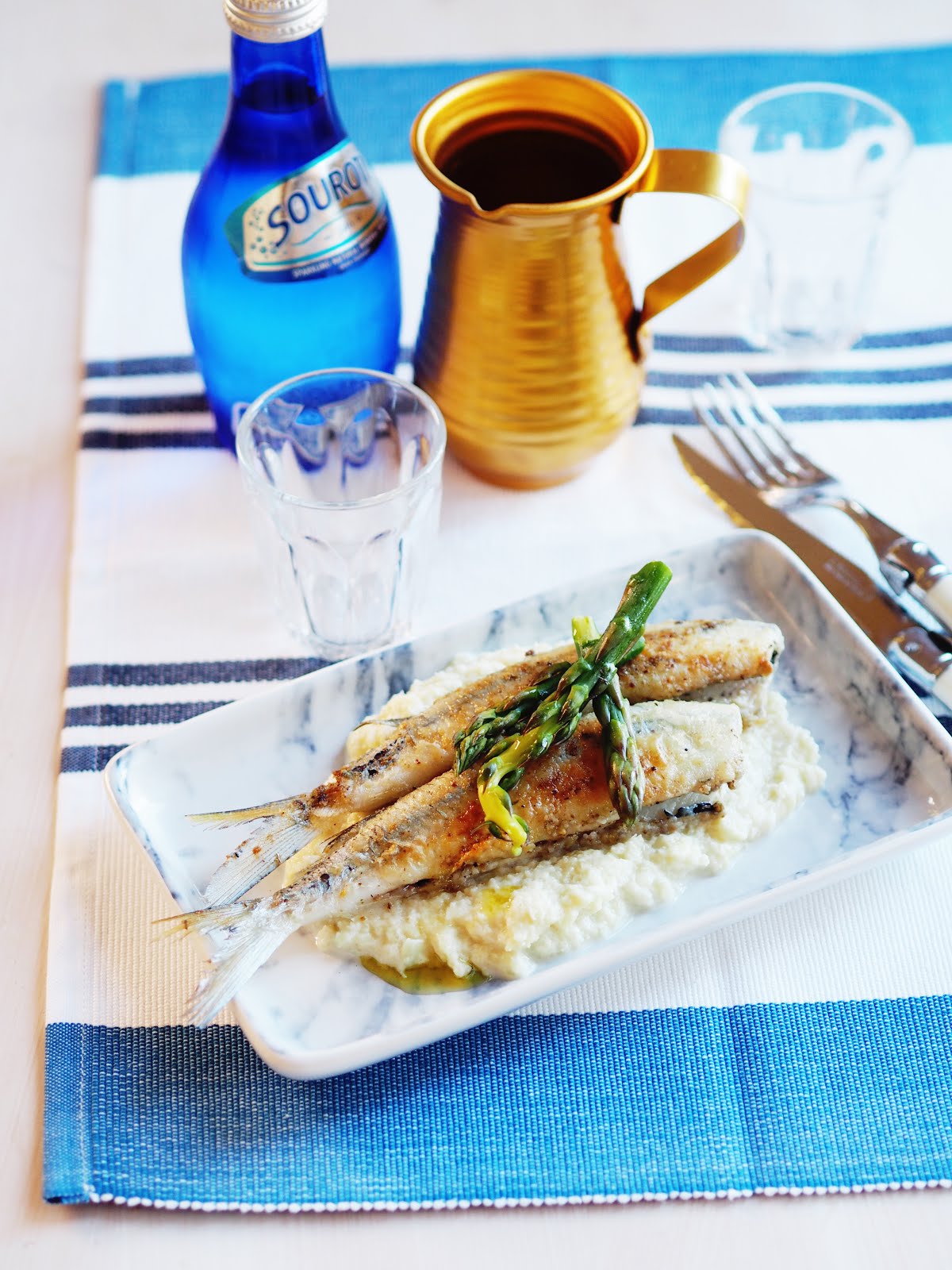
Skordalia often makes a regular feature on our weekly family menu. The thick, creamy, garlicky puree is definitely not for the faint hearted! It's the perfect partner for really any kind of seafood - so good a pairing in fact, that on my mother in law's home island fish stock or the cooking liquid from the fish is usually used to make the skordalia.  The other traditional ingredients for skordalia are usually potato or bread and almond meal.  My usual skordalia recipe required a tweak recently, when we had friends call in for a casual lunch. Gluten, dairy and potatoes were strictly off their menu - hence my milder cauliflower skordalia came to be. The almond milk in this recipe is a little nod to the traditional almond meal that is often used to make skordalia. The creamy puree contrasted nicely with the crunchy, lemony coating of the garfish. In this recipe I have used the excellent Sparoza herb and spice blend with lemon zest, which is available online from Homer St. ...

Naxiot style octopus & vegetable pickle (χταποδι τουρσι)

Image
Naxos is well known for its incredible culinary heritage and its reputation rests largely on the amazing produce of the island. This super easy to make meze, which hails from Naxos, can be easily recreated outside of the island, with produce from your local farmers market. We enjoyed this meze in Naxos recently ( you can read more in my guide to Naxos ). The recipe comes from a small fisherman's taverna, which sits right on the main ferry port. It was the perfect start to a leisurely evening meal, accompanied by a very chilled ouzo, set against the spectacular backdrop of the sun setting over Naxos' famous Porta. This was one of those holiday dishes that was really going to stay in my memory and I just had to ask for the recipe. I could have seen myself back in Sydney regretting a missed opportunity if I had not asked. Luckily the taverna cook was more than happy to oblige and the recipe was shared, along with the secret tip to use plenty of fresh herbs - a common theme in much...

Lamb and chickpea clay pot 'youvetsi' ( αρνι με ρεβιθια γιουβετσι)

Image
There is something about cooking in clay, which just makes the food taste better. Cooking in an unglazed, organic clay pot creates an aroma that is both earthy and sort of smokey. Nearly all Greek and wider Mediterranean food was cooked, or stored in clay, in ancient times. I love the range and variety of clay pots that you can still buy in Greece today. Wide bellied pots for simmering tough cuts of meat and narrow necked pots for cooking beans and other legumes, are just a couple to choose from. Apart from the unique character and aroma of food cooked in clay, it also feels healthier - because you don't need to use much cooking fat at all. I've never had any issue of burning food in a clay pot either, because the clay pot heats up slowly and cooks the food more evenly.  This 'one pot' dish can be found in many regions of Greece and is particularly hearty in cooler weather. In many regions pasta would be added to the pot, to soak up all the cooking juices, instead of ch...

Easy roast chicken with balsamic bay leaves and lemon (Kοτoπουλο ψητo με δαφνης μπαλσαμικο και λεμoνι)

Image
The humble chicken is really a culinary blank canvas, just waiting for the right combination of herbs and spices, to bring it up to its true gastronomic potential. This is where the lovely Gina of Homer St , has once again stepped in with inspiration, generously providing me with some of her incredibly aromatic herbs and spices, direct from carefully sourced, high quality Greek producers.  Most recipes for Greek style roast chicken always involve lemon in one form or another. Taking a tip from this tradition, in this recipe I have used a zesty lemon herb and spice blend from the producer Sparoza. The spice contains coriander, ginger, pink pepper, peppercorns, thyme, rosemary, bay leaves, mustard seeds, lemon zest, sage - and my favourite, lemon verbena. Opening the packet is just like walking into one of the spice merchants on Evripidou Street in Athens. To enhance the aromatic qualities of the chicken, I also added some balsamic bay leaves from the producers 'Daphnis and Chlo...

Palm Sunday: Bakaliaro Bourdeto (Μπακαλιαρος μπουρδετο)

Image
Bakaliaro (Μπακαλιάρος) or salt cod, is hugely popular in Greek cuisine. None more so than on two days during Lent, the Annunciation on March 25th and then again on Palm Sunday. It also just happens to be one of Mr K's most favourite dishes, when it served batter-fried in crisp pieces with pungent, garlicky skordalia. You can find a recipe for this style of bakaliaro here . While fried bakaliaro is really delicious, this traditional "cucina povera" fish can also been enjoyed in a variety of other ways. For our Palm Sunday celebrations this year, I decided to forgo the fried affair and instead opted to try a traditional Ionian preparation for the salt cod, called a bourdeto. A bourdeto (Μπουρδέτο) is an Ionian style of cooking, most commonly associated with the Island of Corfu. It is said to hail from the Venetian word 'brodeto' meaning broth. In its most basic form, a bourdeto involves fish, slowly simmered in a fresh in tomato sauce with onion, garlic and spicy r...