Posts

Showing posts with the label Winter

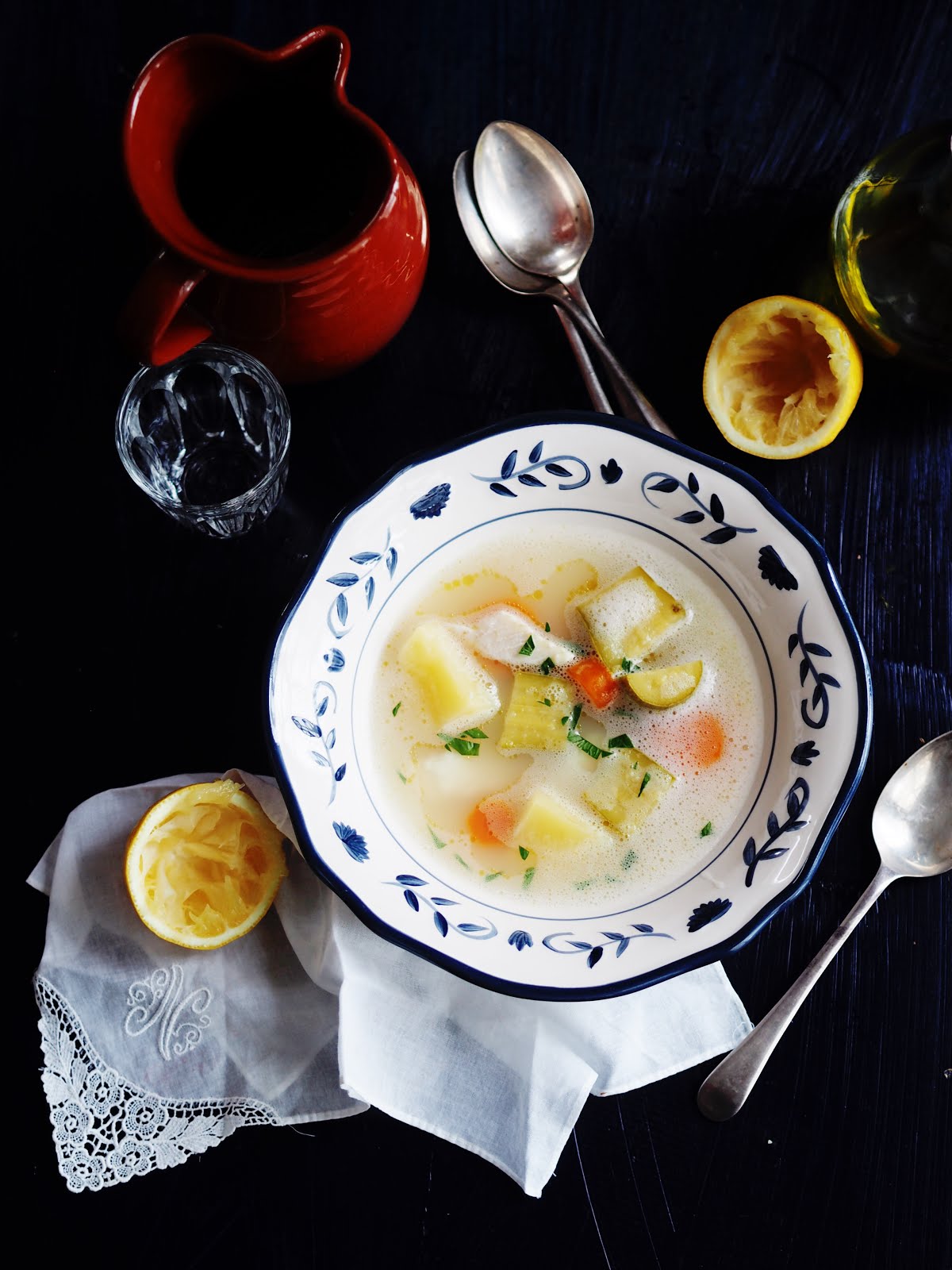
Mum's fish soup with avgolemono (Ψαροσουπα αβγολεμονο | ΣΥΝΤΑΓΕΣ ΜΑΜΑΣ)
Image
One of the most loved home style Greek recipes, psarosoupa (fish soup) is a perfect dish for those cooler autumn nights that are coming our way here in Australia.  Mum's recipe starts with a simple vegetable stock, which uses plenty of celery leaves in lieu of the Greek grown herb 'selino'. If Ma were in Greece she would use selino, the wild celery, that is both a herb and a vegetable. It has much thinner stalks than our ordinary celery and more leaves. Hence, Ma's use of plenty of celery leaves in this dish.  Once the vegetable stock is created, the fish is then cooked in the stock. Ma's fish of choice here in Australia is snapper, but you could use any fish with firm white fillets. The odd red mullet (called barbounia) can also be added. Before the fish is cooked however, Ma's secret for perfect fish soup is to scrupulously clean the fish. They should be cleaned to the point where, when they are placed under a running tap, the water runs clear and is not cloud...

Ma's octopus pilafi (χταποδι πιλαφι | συνταγες μαμας)

Image
There is nothing my mother in law likes more, than to be in her kitchen creating food for her family. After a serious illness over the last few months, it has been wonderful to see Ma feeling just well enough again to be back in the kitchen doing what she loves best - cooking. When she is not cooking, then there is nothing more that we like to do together more, than talk about food and recipes. Yesterday, Ma shared with me two of her recipes, octopus pilafi, a traditional Greek Lenten dish and her own, more revolutionary (and certainly not traditionally Greek), chilli puree.  My lovely brother in law recently shared with me a story about Ma's discovery of chilli. It was about 20 years ago and after a period of experimenting, she hasn't looked back since! Ma loves chilli for its reported health benefits as well as the heat and flavour it brings to her dishes. However, as it is not a traditional Greek ingredient, Ma uses it sparingly in the form of a milder chilli puree made from...

Gigandes plaki (γιγαντες πλακι)

Image
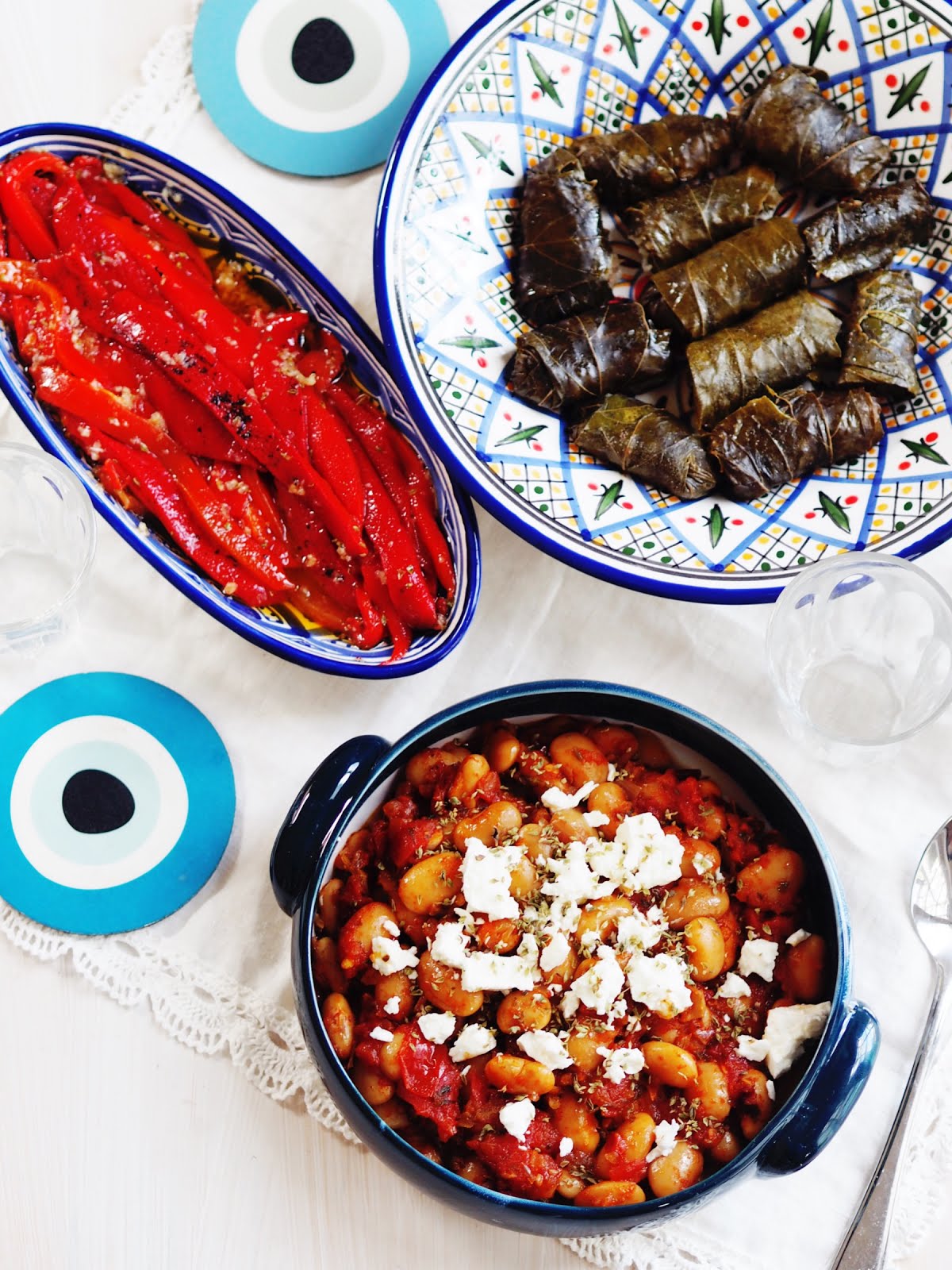
A variety of beans are used in Greek cooking. Small beans, such as haricot beans are used in fasolada soup or chilled summer salads. However, giant white beans, known as 'butter beans' in English are the sole contenders for being baked in the oven in a classic dish called "gigandes plaki " also spelled gigantes or yigandes (γίγαντες πλακί). While many there many different regional recipes for this dish, most commonly the beans are first cooked in water to soften them and then baked in fresh tomato sauce with carrots and celery. In some areas, particularly in northern Greece, a more hearty winter version of the dish calls for spinach, sausage or even spicy whole chili peppers to be added. In our family, my mother in law's Zakynthian origins shine through in this recipe with a classic Ionian style freshly grated tomato sauce, flavoured with plenty of parsley and garlic. You can reduce the amounts of these in the recipe if you prefer a more mildly f...

Pine honey, almond and pine nut tart (Ταρτα με πευκομελο, αμυγδαλο και κουκουναρι)

Image
One of my favourite Greek products, is the dark pine or ‘honeydew’ honey from the forests of Peloponnese. It has a malty, spicy aroma and a caramelized flavor.   It is the perfect honey for using in this simple tart, as a floral honey could easily overwhelm the buttery shortbread-like crust and mild pine nuts. Pine honey also has fewer calories and a lower total sugar content than floral honeys and is rich in minerals and amino acids.    You could make your own short crust pastry base for this tart, but I like to use the wonderfully light and crumbly Careme gluten free short crust pastry. It has a subtle nutty flavour from wholegrain flours , which works so well with the almonds and pine nuts in this tart. This is a great cupboard standby dessert, which couldn’t be simpler to make. It is best served with a dollop of thick, Greek style sheep milk’s yoghurt for a luxurious touch. Pine honey, almond and pine nut tart (Τάρτα με πευκόμελο, αμύγδαλο και κουκουνάρι) Se...

Kumquat and metaxa marmalade (κουμ κουατ και Μεταξα μαρμελαδα)

Image
The best thing about returning home from a Greek summer? It has to be spending time with family and friends that we missed while we were away and drinking in the winter sunshine in dad's beautiful garden.  While we had been basking in the Greek summer sun, dad's citrus was revelling in near perfect growing conditions in a little corner of inner west Sydney. Dad's citrus was not alone, with many Australian farmers reporting it had been an amazing year for all kinds of citrus fruits.  The kumquat tree in dad's garden was quiet simply heaving with little orange gems. Talk about a Christmas in July! The kumquat tree came with the best kind of Christmas decorations - edible fruit. Well, 'edible' fruit that requires a little tender loving care. You certainly would not want to be eating these juicy but bitter little guys fresh straight from the tree.  That is where Ma's sage advice came to the fore. The kumquat is such an Ionian kind of fruit.  Commonly made into a...

Simple Sicilian inspired winter lunch

Image
Agrigento's Valley of Temples is one of Sicily's most popular tourist destinations. This spectacular Ancient Greek site is set against a backdrop of incredible trees; almonds, olives and Sicily's ever present citrus fruits. Indeed, it would be hard to imagine Sicily's unique cuisine without them. While there are a large number of differnt types citrus fruits grown across Sicily, Agrigento's main crop is the navel orange, called 'Brasiliane'.  The province of Agrigento stretches from inland Sicily to the coast. As such, the food of this province of Sicily has a good deal of spectacularly varied produce to choose from - navel oranges included. Sardines and anchovies are some the most favoured seafood, enjoyed fresh on the coast and in times past, preserved in salt to also be enjoyed by those in the more inland region of this province.  When we recently visited Agrigento, I had the good fortune to be able to try some of the spectacular local sardines. Whenever ...

Lamb and chickpea clay pot 'youvetsi' ( αρνι με ρεβιθια γιουβετσι)

Image
There is something about cooking in clay, which just makes the food taste better. Cooking in an unglazed, organic clay pot creates an aroma that is both earthy and sort of smokey. Nearly all Greek and wider Mediterranean food was cooked, or stored in clay, in ancient times. I love the range and variety of clay pots that you can still buy in Greece today. Wide bellied pots for simmering tough cuts of meat and narrow necked pots for cooking beans and other legumes, are just a couple to choose from. Apart from the unique character and aroma of food cooked in clay, it also feels healthier - because you don't need to use much cooking fat at all. I've never had any issue of burning food in a clay pot either, because the clay pot heats up slowly and cooks the food more evenly.  This 'one pot' dish can be found in many regions of Greece and is particularly hearty in cooler weather. In many regions pasta would be added to the pot, to soak up all the cooking juices, instead of ch...

Mousaka (μουσακά)

Image
Just as we all thought spring had arrived, winter decided to go for one last hoorah and rain all over our new espadrilles!! Mousakas (μουσακάς) is the perfect dish for this time of year, it manages to taste of summery Greek holidays and family parties, and boasts just enough comforting qualities to see you through a temperature drop and a spring shower. There is a lot of debate amongst Greek cooks about what constitutes the perfect mousaka. It is commonly made with minced beef or a pork/veal sauce, fried eggplants, kefalotyri cheese and is topped off with an egg-enriched béchamel sauce. Some people prefer to use lamb - a version to which Mr K strenuously objects. Other versions include eggplant and potatoes, or eggplant and zucchini, or all three. My version is based on my mum's 1970s dinner party classic - from the time when a Greek cooking trend swept through Australian dining rooms from Surry Hills to Sutherland. Mum recounts serving her mousakas in individual stoneware dishes t...

Braised wild greens 'tsigariasta’ with octopus (τσιγαριστά με χταπόδι)

Image
Given that I have just posted my " Field Guide to Greek Wild Greens ", I thought it perhaps fitting to share a new recipe with you, which uses a variety of different wild greens and comes from my mother in law’s recipe collection. Quite commonly in tavernas all over Greece, a big bowl of horta is served alongside a plate of char-grilled octopus. At home, the weekly meal is a little more simple and the octopus and horta are combined into the one dish. Sometimes you can just have the braised greens alone and the style of cooking them is called ‘tsigariasta’ (τσιαγαριαστά) which means sautéed in Greek. It is a very popular style of cooking in the Ionian islands. Depending on the season, the greens can be braised with a little fresh tomato, or in winter when citrus is at its best, you can use a generous squeeze of lemon. To give the greens a little more flavour – different types of seafood can also be added, depending on the season and what is available. This dish was a common ...

Cooking with Tselementes: chick pea soup (ρεβιθόσουπα)

Image
There is one book common to all the kitchens of Greek women who migrated to Australia in the 1950s and 1960s. That is a book known just as, "Tselementes".  Nicholas Tselementes was well known chef, who trained and worked in some of the finest kitchens in Europe. In 1910, he wrote the first ever Greek Cookbook, which became every Greek housewife's cooking bible. The reason why so many Greek migrant women sought out a highly prized copy of Tselementes has been speculated upon by many food writers, some consider it was symbolic of the growing sophistication of Greek migrant women. On her wonderful blog, " Organically Greek " Maria writes of her own mother's experience in New Zealand,  "...Cookbooks were unknown to her until she migrated...Suddenly it seemed that a cookbook was indispensable. It was as necessary as, as, as sandblasted ballerinas on concertina glass-panelled doors separating the lounge from the dining room, china figurines on the mantelpiece...