Posts

Showing posts with the label Mains

Artichoke, purslane and potato salad (Σαλάτα με γλιστρίδα, αγκινάρες και πατάτες)
Image
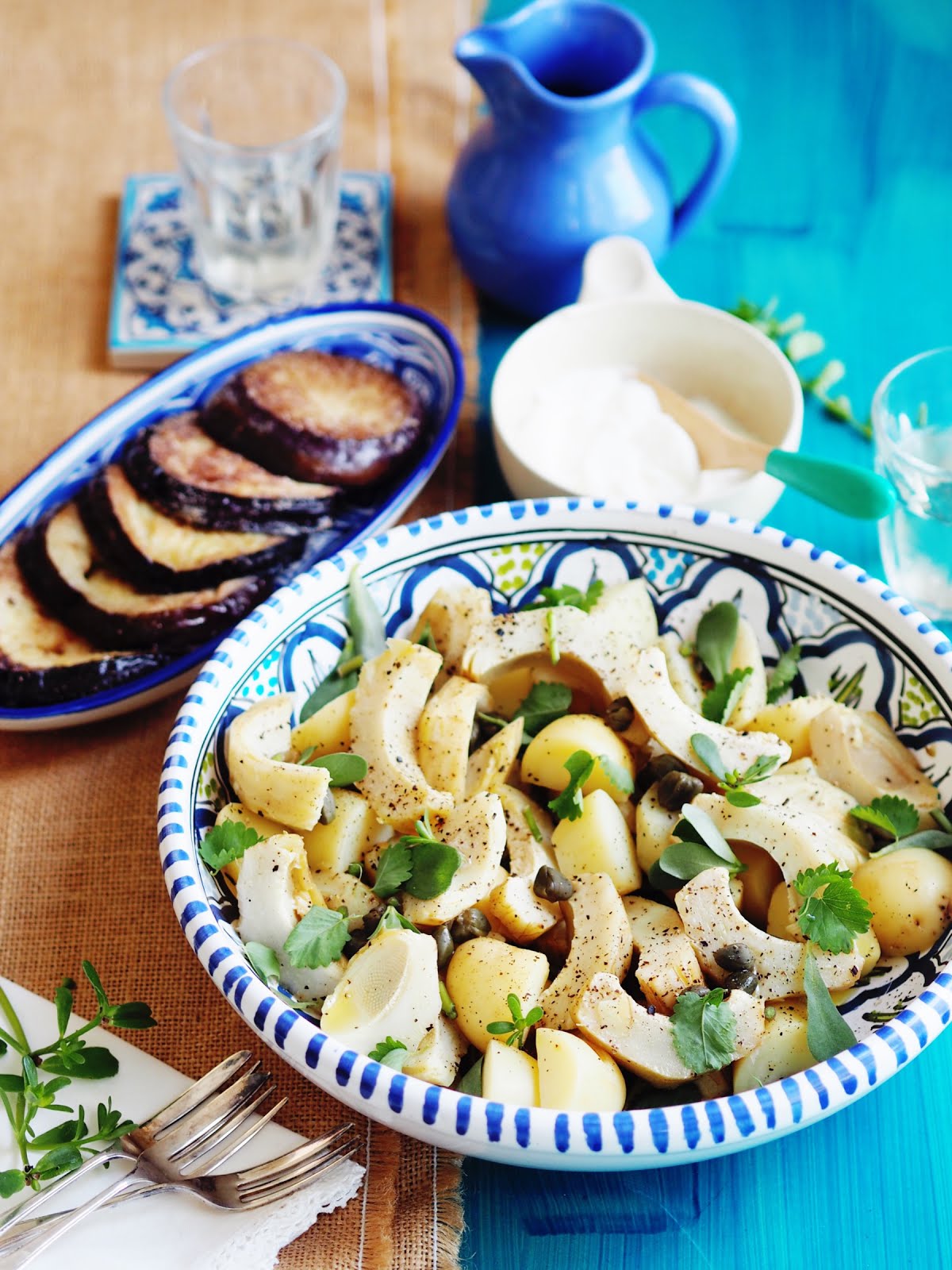
There is no greater love in the Greek home kitchen than a warm salad. A salad made with cooked vegetables, rather than leaves and tossed in a lemony dressing. I love this way of serving vegetables, a meal in themselves when accompanied by a slice of feta dusted in riagni and good quality Greek olives. A warm salad of broccoli is regular home-style staple on the Greek table and simply dressed beetroot is also a big favourite. In summer a warm salad of baby zucchini, baby potatoes and sweet vlita (amaranth) leaves is also very popular. This salad takes its inspiration from the summer garden with fresh artichokes, baby potatoes and lemony purslane. Artichoke, purslane and potato salad ( Σαλάτα με γλιστρίδα, αγκινάρες και πατάτες ) Ingredients 8 artichoke bottoms, fresh or frozen 6 baby potatoes 8 small bunch of purslane, cleaned of any grit and tougher stems removed (save a couple of leaves for garnish) 8 small pickling onions 2 tablespoons dill, chopped For the dressing: 8 teaspoons of o...
Stuffed zucchini blossoms: the baked method (Κολοκυθοανθοι γεμιστοι)

Image
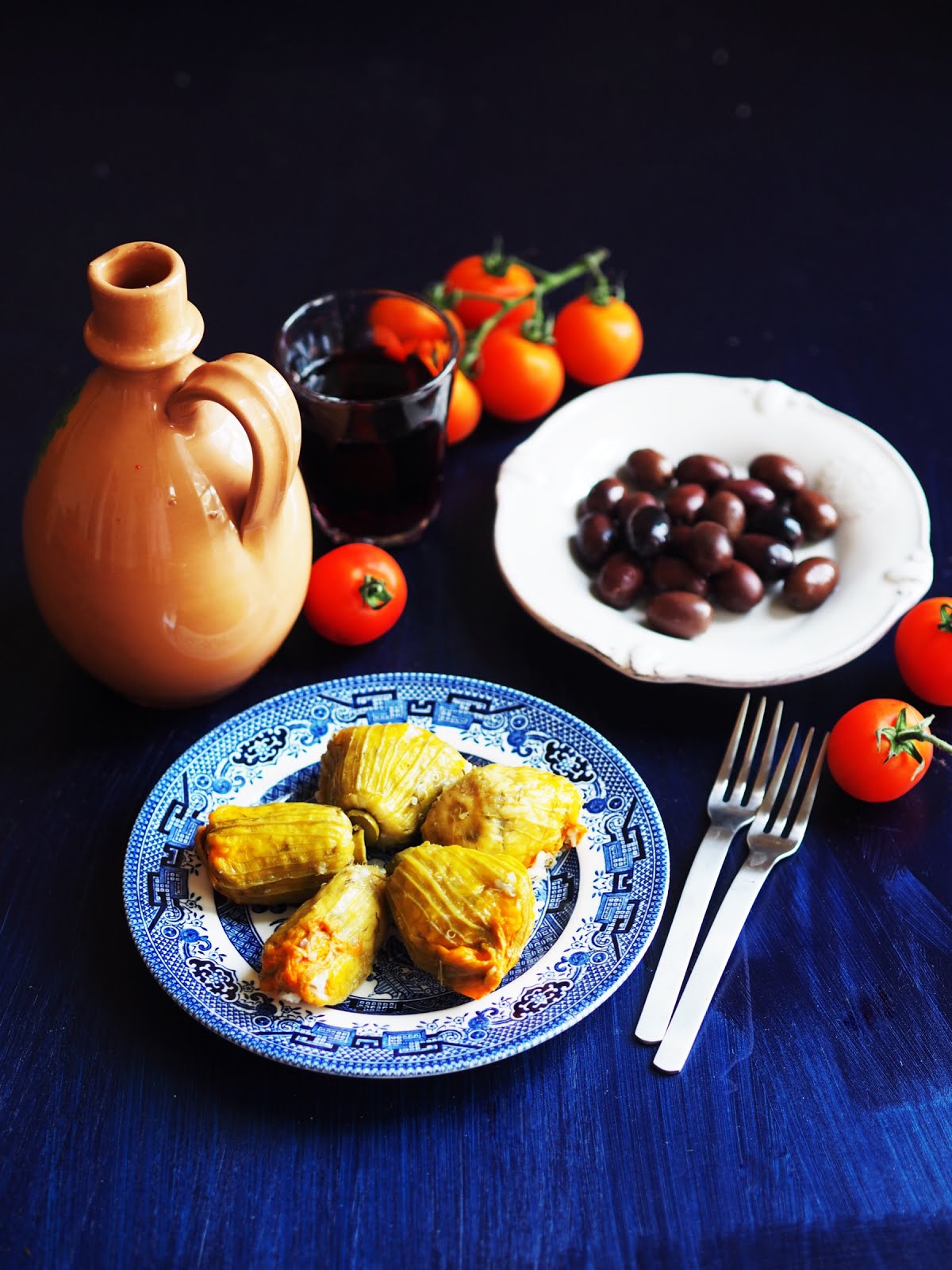
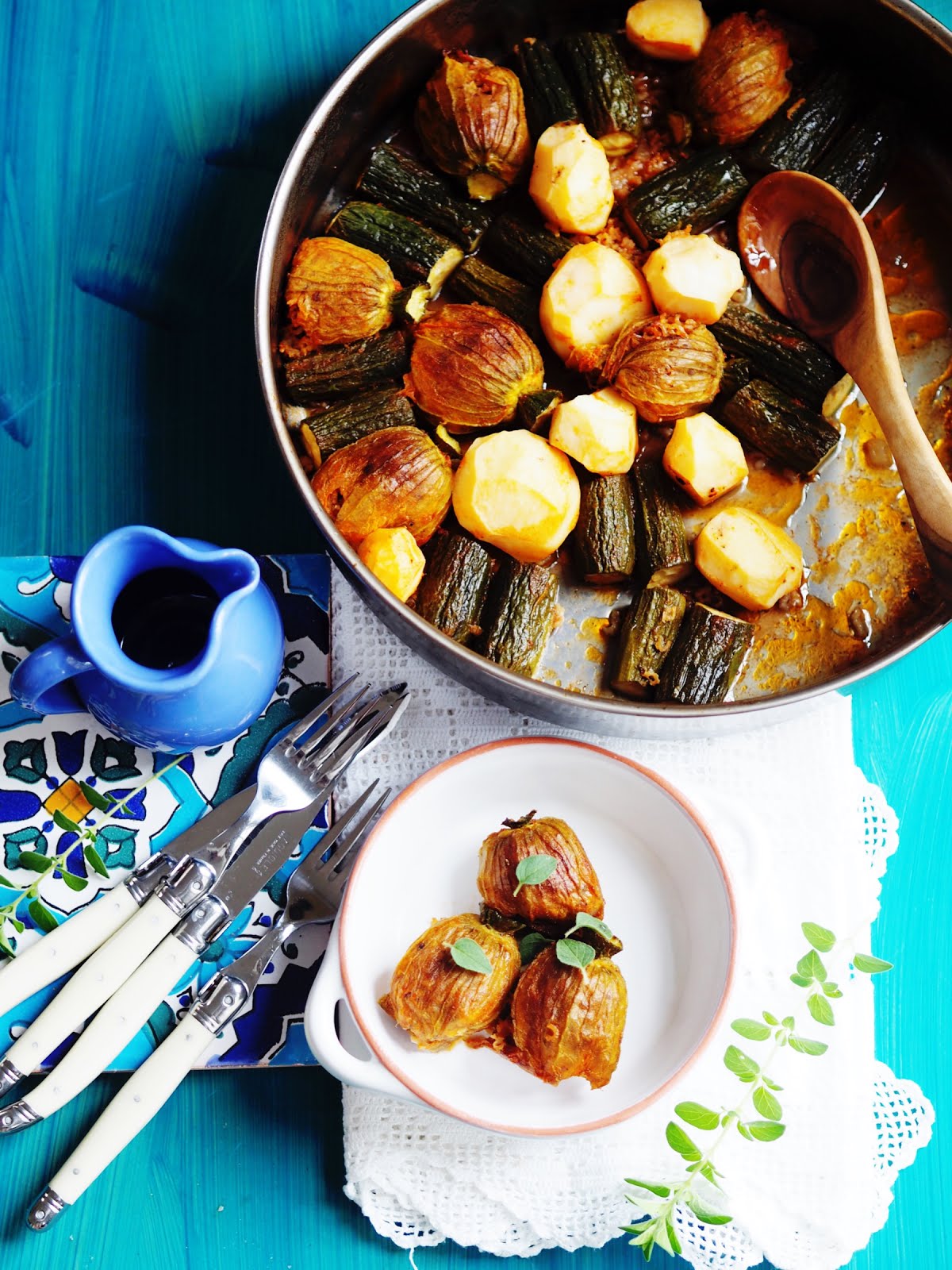
In part two of my ode to summery zucchini blossoms, I bring you the recipe for baked blossoms. In part one of this series of posts, I featured the stove top method for cooking these beauties. As I mentioned before, how you prepare the blossoms really depends on how you were taught by your mother or grandmother. Both methods are equally delicious and without further delay, I bring you the baked recipe!   Stuffed zucchini blossoms: the baked method (Κολοκυθοανθοι γεμ ιστοι) Serves 6; cooking time 60 minutes Ingredients 30 zucchini blossoms 15 or so baby zucchini (these should be available with the blossoms) 4-5 small potatoes, halved or quartered 1 cup Greek Carolina or other medium grain Calrose rice 1 small  brown onion, finely diced 2 garlic cloves, finely chopped 2 tablespoons of fresh dill, finely chopped 2 tablespoons of fresh mint, finely chopped 2 tablespoons of fresh parsley, finely chopped Dried bukovo chilli flakes, to taste Salt and g...

Gigandes plaki (γιγαντες πλακι)

Image
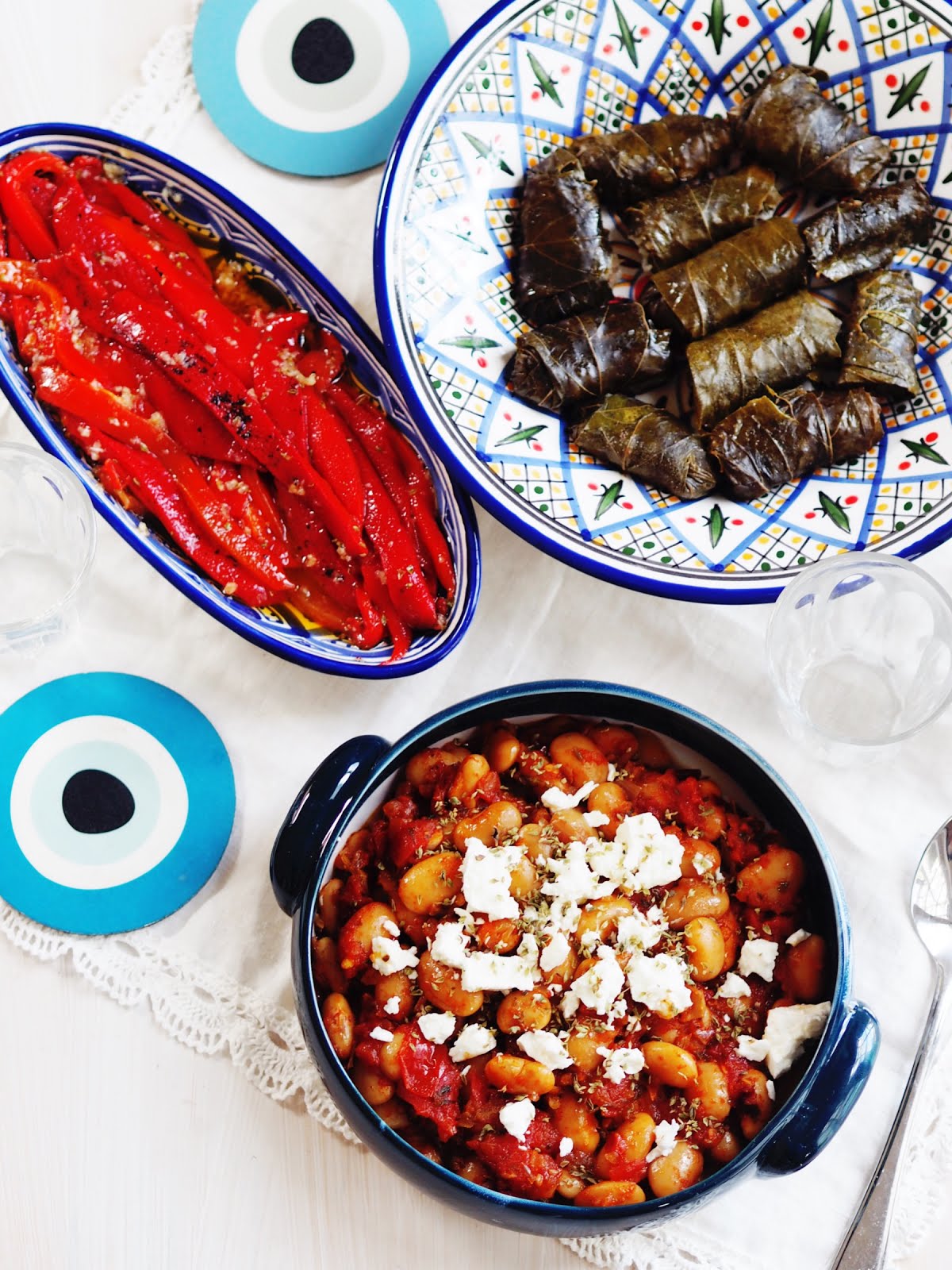
A variety of beans are used in Greek cooking. Small beans, such as haricot beans are used in fasolada soup or chilled summer salads. However, giant white beans, known as 'butter beans' in English are the sole contenders for being baked in the oven in a classic dish called "gigandes plaki " also spelled gigantes or yigandes (γίγαντες πλακί). While many there many different regional recipes for this dish, most commonly the beans are first cooked in water to soften them and then baked in fresh tomato sauce with carrots and celery. In some areas, particularly in northern Greece, a more hearty winter version of the dish calls for spinach, sausage or even spicy whole chili peppers to be added. In our family, my mother in law's Zakynthian origins shine through in this recipe with a classic Ionian style freshly grated tomato sauce, flavoured with plenty of parsley and garlic. You can reduce the amounts of these in the recipe if you prefer a more mildly f...

Stuffed zucchini blossoms: the stove top method (Κολοκυθοανθοι γεμιστοι)

Image
As soon as summer arrives, my cravings for stuffed zucchini blossoms begins. Stuffed zucchini blossoms are a summer staple dish in many Greek homes. They are incredibly delicate and have a subtle flavour, taking well to aromatics such as fresh herbs and lemon or for a more spicy approach, fresh grated tomato and smoky bukovo chilli flakes. There are two ways in which the blossoms are traditionally prepared in Greece; either via a stove top method or baked in the oven. Both ways of preparing the blossoms is delicious and usually really comes down to how you were taught by your mother or grandmother. In this post, I'm offering the stove top method and a follow up post will feature the baked method! While zucchini blossoms are relatively cheap and easy to buy at markets in Greece, the same is not true in Australia. Although, they do make an appearance at some of our farmer's markets and are of high quality, the blossoms are o...

Braised artichokes with broad beans (αγκιναρες με κουκια)

Image
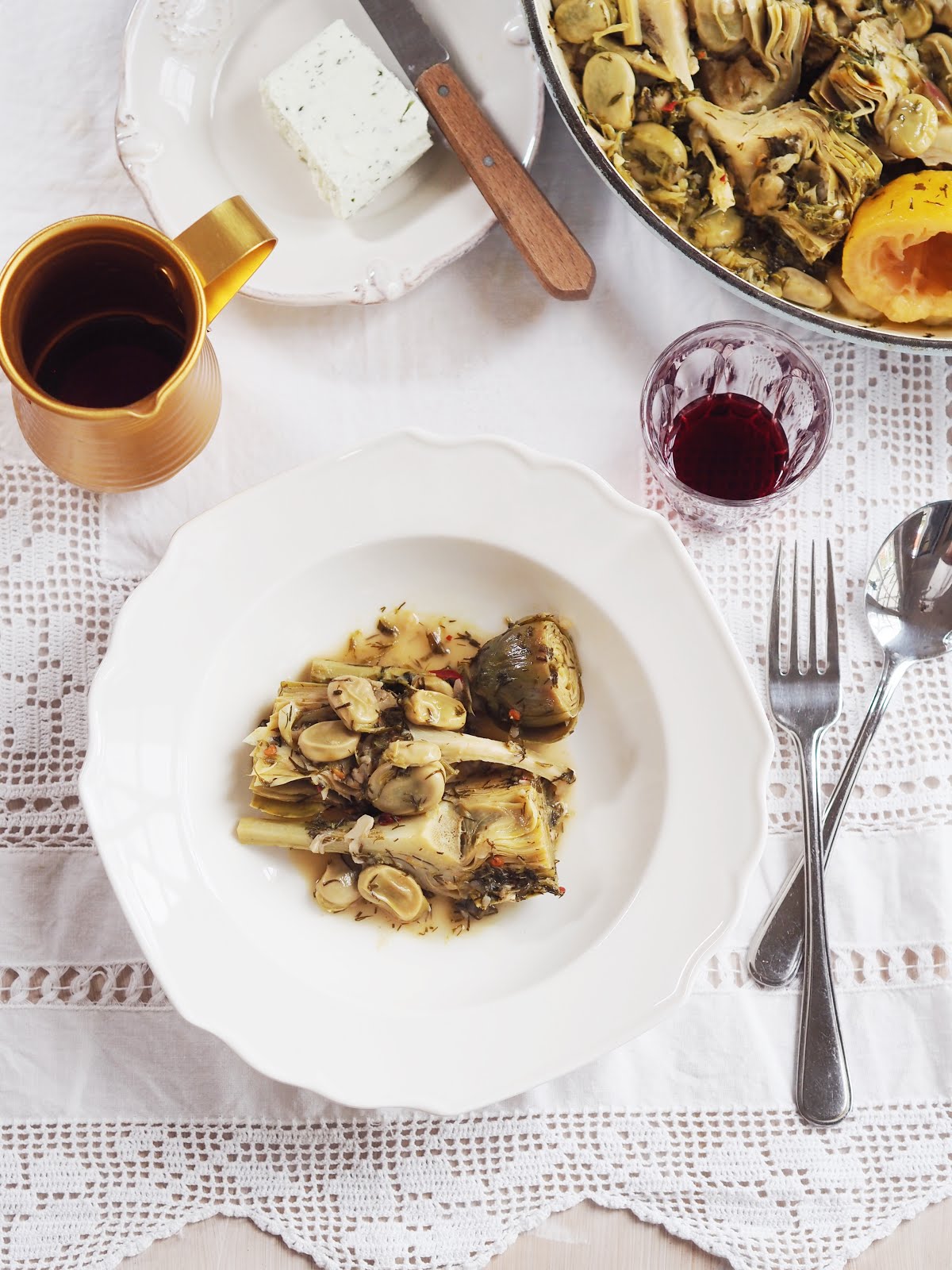
It's that time of the year again. My favourite time. It's artichoke season. For me, the artichoke is quite simply the queen of all vegetables. At her best, when eaten in season. although I can't deny that I also love a good preserved artichoke (especially the divine homemade ones that I tried on the spectacular Greek island of Tinos this year) and my freezer is never complete without a bag (or two) of frozen artichokes, from Greece, of course.  Artichokes are not only delicious, but they are nutritional powerhouses. They contain potassium, magnesium, folate, antioxidant vitamin C and a surprising amount of fibre. Indeed, a large artichoke can contain up to 10 grams of fibre and 1/2 cup of cooked artichoke hearts can contain around 7 grams of fibre. The addition of broad beans to this traditional Greek dish also brings a further 4.6 grams of fibre, per 1/2 cup of cooked broad beans. Evidence suggests that fibre can help to lower the risk of heart disease and cancer and contr...

Fried garfish with cauliflower 'skordalia' (Τηγανητα Ζαργανα με κουνουπιδι σκορδαλια)

Image
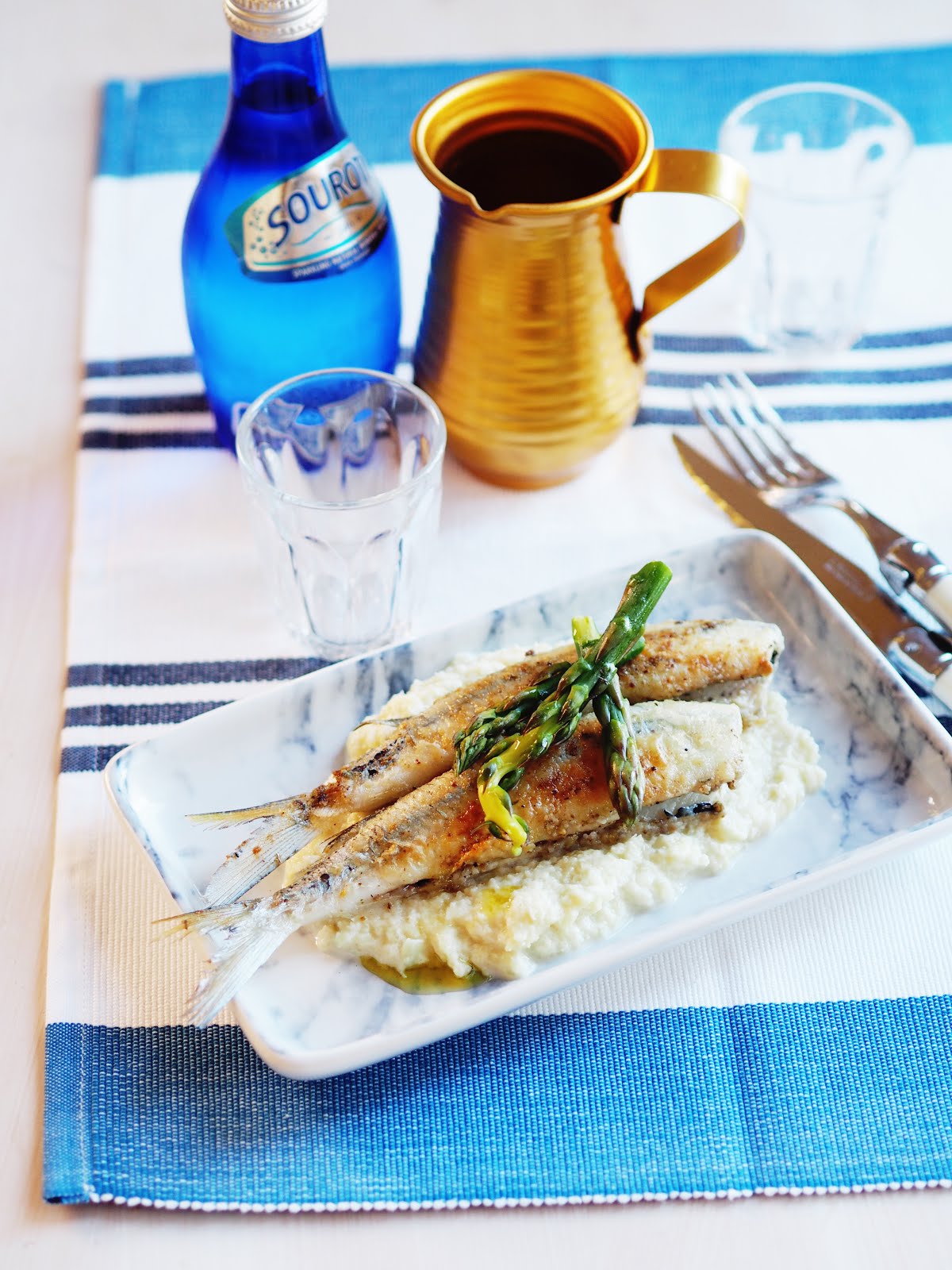
Skordalia often makes a regular feature on our weekly family menu. The thick, creamy, garlicky puree is definitely not for the faint hearted! It's the perfect partner for really any kind of seafood - so good a pairing in fact, that on my mother in law's home island fish stock or the cooking liquid from the fish is usually used to make the skordalia.  The other traditional ingredients for skordalia are usually potato or bread and almond meal.  My usual skordalia recipe required a tweak recently, when we had friends call in for a casual lunch. Gluten, dairy and potatoes were strictly off their menu - hence my milder cauliflower skordalia came to be. The almond milk in this recipe is a little nod to the traditional almond meal that is often used to make skordalia. The creamy puree contrasted nicely with the crunchy, lemony coating of the garfish. In this recipe I have used the excellent Sparoza herb and spice blend with lemon zest, which is available online from Homer St. ...

Simple Sicilian inspired winter lunch

Image
Agrigento's Valley of Temples is one of Sicily's most popular tourist destinations. This spectacular Ancient Greek site is set against a backdrop of incredible trees; almonds, olives and Sicily's ever present citrus fruits. Indeed, it would be hard to imagine Sicily's unique cuisine without them. While there are a large number of differnt types citrus fruits grown across Sicily, Agrigento's main crop is the navel orange, called 'Brasiliane'.  The province of Agrigento stretches from inland Sicily to the coast. As such, the food of this province of Sicily has a good deal of spectacularly varied produce to choose from - navel oranges included. Sardines and anchovies are some the most favoured seafood, enjoyed fresh on the coast and in times past, preserved in salt to also be enjoyed by those in the more inland region of this province.  When we recently visited Agrigento, I had the good fortune to be able to try some of the spectacular local sardines. Whenever ...

Lamb and chickpea clay pot 'youvetsi' ( αρνι με ρεβιθια γιουβετσι)

Image
There is something about cooking in clay, which just makes the food taste better. Cooking in an unglazed, organic clay pot creates an aroma that is both earthy and sort of smokey. Nearly all Greek and wider Mediterranean food was cooked, or stored in clay, in ancient times. I love the range and variety of clay pots that you can still buy in Greece today. Wide bellied pots for simmering tough cuts of meat and narrow necked pots for cooking beans and other legumes, are just a couple to choose from. Apart from the unique character and aroma of food cooked in clay, it also feels healthier - because you don't need to use much cooking fat at all. I've never had any issue of burning food in a clay pot either, because the clay pot heats up slowly and cooks the food more evenly.  This 'one pot' dish can be found in many regions of Greece and is particularly hearty in cooler weather. In many regions pasta would be added to the pot, to soak up all the cooking juices, instead of ch...

Mizithra and 'Krokos Kozanis' saffron filled pasta in broth

Image
The world knows Italy as the home of pasta, but it's origins stretch across the Mediterranean. In Greece, pasta also plays a starring role in the food culture, with significant regional diversity displayed in the variety of shapes and dishes on offer. This recipe is my twist on a traditional dish called 'Latzania' which comes from Astypalia - an island in the Dodecanese archipelago. Latzania are a cheese filled pasta and custom calls for them to be served on the last weekend before lent. The traditional shape of the Latzania is an unusual 'lolly wrapper/bow tie' style where the two ends are twisted. I opted to skip the large bow ties and went instead for a simple round shape. However, I've kept the traditional filling of goat cheese and saffron. Mizithra and saffron filled pasta in broth Ingredients For the pasta 3 - 3 & 1/2 cups of flour 2 large eggs 1/2 - 1 cup water For the filling 1 cup of well drained homemade mizithra cheese (see the recipe here ) 1/2 ...

Easy roast chicken with balsamic bay leaves and lemon (Kοτoπουλο ψητo με δαφνης μπαλσαμικο και λεμoνι)

Image
The humble chicken is really a culinary blank canvas, just waiting for the right combination of herbs and spices, to bring it up to its true gastronomic potential. This is where the lovely Gina of Homer St , has once again stepped in with inspiration, generously providing me with some of her incredibly aromatic herbs and spices, direct from carefully sourced, high quality Greek producers.  Most recipes for Greek style roast chicken always involve lemon in one form or another. Taking a tip from this tradition, in this recipe I have used a zesty lemon herb and spice blend from the producer Sparoza. The spice contains coriander, ginger, pink pepper, peppercorns, thyme, rosemary, bay leaves, mustard seeds, lemon zest, sage - and my favourite, lemon verbena. Opening the packet is just like walking into one of the spice merchants on Evripidou Street in Athens. To enhance the aromatic qualities of the chicken, I also added some balsamic bay leaves from the producers 'Daphnis and Chlo...

Palm Sunday: Bakaliaro Bourdeto (Μπακαλιαρος μπουρδετο)

Image
Bakaliaro (Μπακαλιάρος) or salt cod, is hugely popular in Greek cuisine. None more so than on two days during Lent, the Annunciation on March 25th and then again on Palm Sunday. It also just happens to be one of Mr K's most favourite dishes, when it served batter-fried in crisp pieces with pungent, garlicky skordalia. You can find a recipe for this style of bakaliaro here . While fried bakaliaro is really delicious, this traditional "cucina povera" fish can also been enjoyed in a variety of other ways. For our Palm Sunday celebrations this year, I decided to forgo the fried affair and instead opted to try a traditional Ionian preparation for the salt cod, called a bourdeto. A bourdeto (Μπουρδέτο) is an Ionian style of cooking, most commonly associated with the Island of Corfu. It is said to hail from the Venetian word 'brodeto' meaning broth. In its most basic form, a bourdeto involves fish, slowly simmered in a fresh in tomato sauce with onion, garlic and spicy r...