Posts

Showing posts with the label Savory

Hilopites: making fresh or dry pasta for winter soups and stews
Image
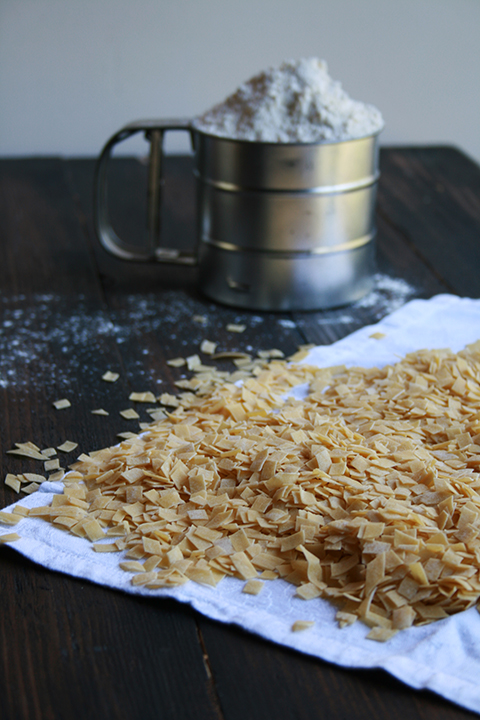
     I can’t recall any summer of my life that we didn’t make dry pasta at home for the winter. What has changed through the years is my role in this family tradition. When I was little and we spent the whole summer at our cottage, my mother, together with the other housewives in our neighborhood, would organize a ‘’hilopites week’’. During this week they would gather at a different house each day and help each other with the hard work of making enough of this pasta for the rest of the year. More hands can make the process easier, faster and actually fun, with lots of laughter, cakes, coffee breaks and gossip. I and the other kids were given a piece of dough to use as a ‘’play dough’’ so as not bother the mums who were working with their rolling pins and knives.       Nowadays we make even more pasta for the tavern, and not just in summer but during winter as well. Rolling pins have been replaced with pasta machines and my adult role calls for fast han...
Zucchini flowers, stuffed with rice, summer veggies, and herbs

Image
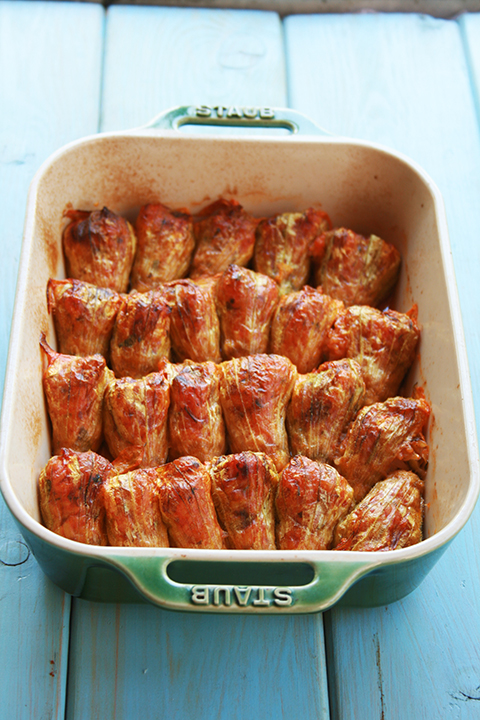
          Searching the Internet for some info on edible flowers, I saw some beautiful pictures of cakes and other fancy desserts decorated with, among other exotica, small blue and yellow pansies and chrysanthemum flowers. Did we always eat pansies on our cakes and in colorful salads or is it one more innovation from Noma (with its inventive kitchen) that has been immediately adopted by all of us?        Well, in fact, dried flowers have been used for thousands of years as spices in cooking or in herbal teas for medicinal purposes. Their use in modern cooking today as decorative edible ingredients is really a rebirth of this very old tradition.  Roses and zucchini- squash flowers have never stopped being used in cooking.       In Greece we make rose petal jam and we use zucchini flowers in different savory recipes.  When I was a child, whenever my mother made stuffed tomatoes, there would always be some sp...

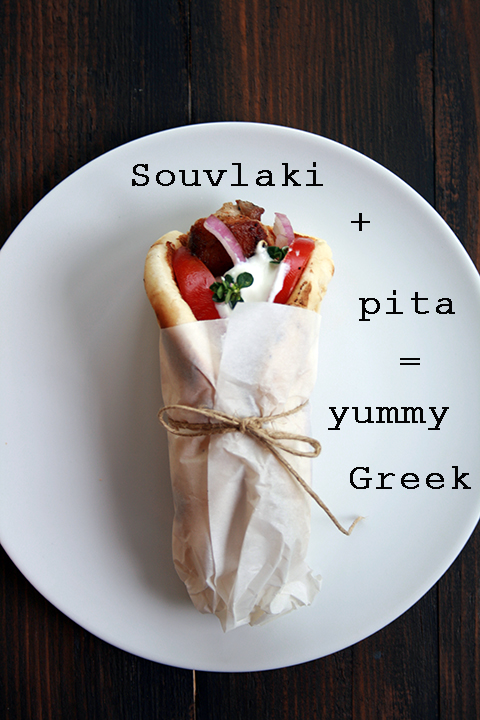
Pita, souvlaki, tzatziki: in other words, a classic Greek yummy!

Image
Imagine this. You are in Greece; it’s Saturday night and some buddies are gathered in the living room to watch the football game. There is tension in the air, but they love what they watch. In front of them on a coffee table are cold beers and pizza - just delivered! But… if you see only pizza, then what you imagine is not taking place in Greece!  On a Greek coffee table there would be souvlakia (plural of souvlaki) and pites (plural of pita) and, of course, beers; beers are always there. We do love pizza, but we love souvlaki more. During these years of crisis, souvlaki places have opened one after the other. People who are thinking to start a food business, more often than not think about a ‘’souvlatzídiko’’ (souvlaki place).  With just 2-2.5 euros you can  buy a pita stuffed with souvlaki, tomato wedges, onion, fried potatoes and tzatziki, a tasty full meal that is cheap and a real life saver especially for people who like their veggies served with meat. . Not every bu...

Black eyed peas stewed with greens

Image
This post was especially written for Pretty Greek Villas , a site owned by my friends Marie- Louise and Ben. If you are thinking Greece this summer, take a look,for some of the most beautiful villas in the country. Peloponnesian cuisine is influenced by its sea-girt mountainous topography. Olive oil, wine, grains, pulses, herbs, wild greens, fish, goat and sheep meat, cheese and honey have been staples in local pantries for millenia.  Though olive trees do not flourish at its highest altitudes, still one third of the country’s entire production comes from here because of the quality of the soil and the mild climate. In fact, Peloponnesian cuisine could be described as an olive oil cuisine since generous amounts of olive oil (often added towards the end of cooking) are poured over greens, beans, and all sorts of stews.  The Northern Peloponnese cuisine has also been influenced by migrations over its long history and so it comprises elements of both the mainland and the islands,...

Savory cheese flan, with walnuts and pomegranate sauce

Image
      Have you ever wondered what ancient Greek cooking would taste like? If ancient Greeks could have known that people in the future would be interested in their cuisine, they would most certainly have written down everything about their art of cooking.  During what we now call the ‘classical period’ ancient Greek civilization reached its peak. Tragic plays and Aristophanes’ comedies describe daily life including scenes around a table. Deipnosophists (from deipnon - dinner and sofos - wise) writing about the philosophic discussions taking place in rich people’s houses during gastronomic feasts described the menus in great detail. These sources inform us that Athenians had three daily meals out of which ‘’deipnon’’, late in the evening, was the last and most rich meal of the day. Dinner in modern Greece is still called ‘’deipno’’.  Their diet consisted of a great variety of fish, meat from both game and stock farming, grains such as barley and wheat and, o...

Greek salad with rotini pasta

Image
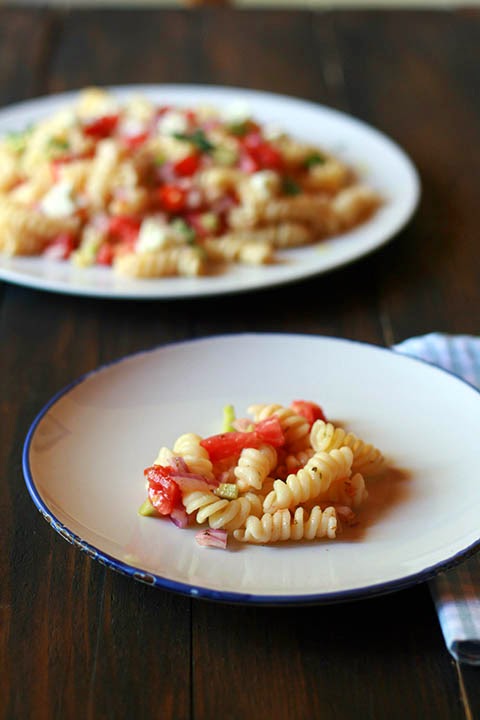
    Hot summer weather provides us with the tastiest fruits and vegetables for the flavorful dishes that make cooks so happy. And when I say dishes I don’t necessarily mean complicated techniques and time consuming recipes. Who wants to spend time in a hot kitchen in the middle of August?     All you need is a good variety of seasonal veggies and a little imagination to prepare a nutritious and filling salad. If you also add pasta you can turn any salad into a full, impressive, and no fuss meal. A classic Greek salad, for example, paired with rotini pasta makes a wonderful summer dish that everyone loves. It is easy to make and can be served chilled or at room temperature, making it  ideal for a picnic.  Greek, pasta salad Serves 6 500gr cooked and chilled rotini pasta 2 medium ripe tomatoes finely chopped 1 small onion finely chopped 1 small cucumber finely chopped 1 green pepper deseeded and finely choped 1Tsp dry oregano 100gr olive oil 200gr crushe...

Lemonáto - Lemon flavored chicken stew

Image
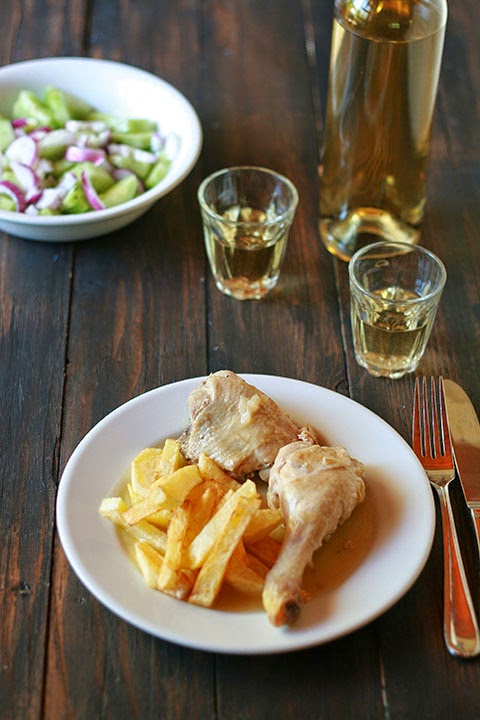
      Lemon flavored casserole stews, or lemonáta (λεμονάτα) as we call them in Greek, are very popular because of the refreshing and slightly sour taste that the lemon juice and peel give to these dishes. Although lemon flavored dishes are cooked all year long, summer is the most popular season for lemonáta. Hot weather calls for light flavors! Poultry and beef are the most popular meat choices for this dish.  Lemonáto can be served with pasta, rice or most preferably with homemade fried potatoes. Lemonáto  1 chicken, cut into 8 serving pieces 100gr olive oil 1medium onion, finely chopped 1 small garlic clove, finely chopped Salt and ground pepper to taste 1litre of hot water or chicken stock Juice and the peel from one lemon In a large skillet over medium heat pour the olive oil and when hot add the chicken, skin side down, and brown quickly for 3 minutes. Turn the chicken over, add onion and the garlic, reduce the heat to medium- low and let the onion so...

Tyropitákia - feta and phyllo, mini cheese pies

Image
    When I was in college cooking was not my forte so, to save me from eating junk food, my mother would load my freezer with dozens of small homemade cheese pies (tyropitákia) for my meals. I would fry them for a few minutes straight from the freezer and immediately had a delicious, crunchy and flavorful snack, - a snack that I have not stopped loving ever since.  They are great with a glass of beer as a meze, or with some salad for a filling and fast meal, or as a handy snack at work or school. We serve them at the restaurant as a first course or for meze dishes.   Tyropitákia Makes about 30 mini cheese pies 6 phyllo sheets (thawed) 300gr  Feta cheese 2 eggs beaten Ground pepper to taste Olive oil, to brush the phyllo sheets  In bowl place the feta and crumble it with a fork. Add the beaten eggs and pepper and mix until you get a firm batter. Cut each phyllo sheet lengthwise into five strips, about 7cm each ( store bought phyllo sheets in Greece are ...

Eliópsoma – Kalamáta olives and thyme, bread sticks

Image
Lying at the head of the Messenian Gulf in southern Greece, Kalamáta is the second most populous city of the Peloponnese. This city is famous all over the planet for wonderful ‘’Kalamáta olives’’ which originated here and have been cultivated in the area for many centuries.  They are now protected under the European ‘’Protected Geographical Status’’ scheme. In Greece Kalamáta olives are mostly eaten as a snack, at branch or lunch, or as a mezedes for drinks, but they are also used in cooking some regional stews and, of course, in olive breads. From time to time my mother would make sourdough olive bread for the family and she would also make some olive bread sticks for me; I have always loved their crust!  Since not everyone is familiar with sourdough, I will give you the yeast version which is, in my opinion, just as good. Olive bread sticks Makes about 10 bread sticks: 250gr all purpose flour, plus some for dusting  200gr tepid water 5gr dry yeast 5gr salt 1Tbsp olive o...

One-pot chicken stew with tomato and chylopites pasta.

Image
  Every summer housewives all over Greece make homemade fresh pasta. The hot weather helps it to dry naturally and it can then be used all year long for traditional cooking.  The most common type of homemade dry pasta is chylopites , so called because the final product is cut into many tiny flat squares. (The literal meaning is flat pies-layers of dough)  Nowadays dry chylopites can be found in every food store all over Greece so everyone can enjoy them, although it has to be said that homemade ones  always taste much better. Chylopites are used in soups or in savory pie fillings in order to absorb juices, but the most popular dish is chicken stew with tomato and chylopites cooked in the sauce. Traditionally a rooster is the preferred bird, but chicken is fine too.  Serves 4 4 big chicken legs (or a chicken cut in 4 pieces) 1 onion chopped 150gr  olive oil  300gr chopped fresh tomatoes (or canned) 1tsp tomato paste 5-6 cloves and a small cinnamon stick...

Feta and sundried tomato balls in oregano and chili flavored olive oil

Image
      What might characterize our family meals in Greece is the variety of dishes served. Housewives rarely cook only one dish for the family and, even when they do, three or more side dishes are usually served as well. We love little bites of this and that, what we call mezedes ; they are most often cheese, olives, pickles, all sorts of savory spreads,and flaky pies with fillings that vary according to the season of the year. Preparing them at home demands some effort but they cost less and offer flavorful snacksevery day.  Meze bites are also served when you want to have a snack with your wine, beer or ouzo but not eat an actual meal. In Greece there are restaurants that serve only meze dishes from an endless list; these places are called ‘’mezedopolia’’ (μεζεδοπωλεία).  Feta balls are a wonderful meze to prepare ahead and can be served straight from the jar to the table or spread on slices of bread. Toasting the bread with feta under the grill for a few minu...

Kouloúria Thessalonikis - crunchy and chewy, breakfast bread rings

Image
Greece is not famous for street food but in cities around the country you will always come across someone either standing by a little glass kiosk or carrying a huge tray selling just one thing: deliciously  crunchy and  chewy freshly baked bread rings. Koulo ú ria are the classic breakfast or mid morning snack for almost every busy office worker or visitor to the center.   These bread rings are called  ‘kouloú ria Thessalonikis’ The word koulo ú ri means something coiled or circular and it is such a perfect description that  the ancient Greeks used the same word, kolyria, to describe their bread treats. Around the eastern Mediterranean such bread rings are also known as known as simit  or simiti.  In the old days paper thin pieces of yellow hard cheese were sold with the bread rings for those who wanted a more filling snack. Kouloú ria have never stopped being popular and, generation after generation, people who appreciate their nutritional val...

Patzarosaláta - Beetroot, Greek yogurt and walnut salad

Image
Tsatziki may be an all time classic for Greeks but, when we had guests at home, my mother always thought it was too garlicky for everyone’s taste. Of course you can use less garlic but then it wouldn’t be a tsatziki!  Beetroot salad (patzarosaláta, παντζάροσαλάτα) is a wonderful alternative side dish.  With just an idea of garlic and an impressive light purple color when mixed, it is ideal for any occasion.  It compliments both vegetable and meat stews, as well as barbecued and oven baked dishes. Greek yogurt with its thick consistency holds the ingredients in the salad together, giving a silky texture to the final dish. You can use low fat yogurt but since this dish is very healthy and balanced, why not use full fat yogurt to contribute to a rich taste?  Walnuts match really well with the other ingredients and provide a light nutty flavor.  Patzarosaláta 250gr Greek full fat yogurt 150gr cooked beetroot (a big bulb) 30gr olive oil (2Tbsps) 1 small garlic clov...

Lamb fricassee with wild greens and avgolémono sauce

Image
          The French term fricassee refers to meat cooked by a method somewhere between a sauté and a stew and served with a white sauce. It is a mystery how this term came to define a totally different thing in Greek cuisine. We Greeks call fricassee (φρικασέ) any meat or even fish, that is cooked with greens and thickened with avgolémono (egg and lemon) sauce. The most popular Greek fricassee calls for lamb with wild greens and herbs. In Greece we love wild greens which are collected in the country side, from September to May, and most often cooked in plenty of water and served as a salad seasoned with olive oil and lemon juice. Of course all kinds of greens such as kale, chicory or even lettuce can be used in a fricassee. Lamb fricasse 1kg lamb cut in chunks or portions 1 red onion chopped 200gr olive oil 1kg greens (kale, chicory, lettuce, roughly chopped) 2 fresh spring onions chopped  2tbsps chopped dill 1 litre of hot water salt and pepper to taste...