Posts

Showing posts with the label mahlepi

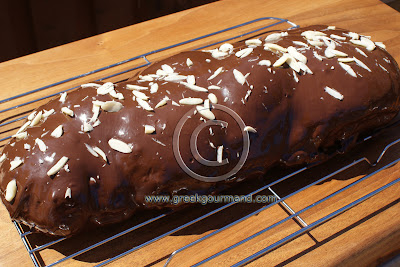
Chocolate Tsoureki (Τσουρέκι Σοκολατένιο)
Image
 I visited the northern Greek province of Macedonia. We stayed for several days in Thessaloniki where we admired and sampled the sights and tastes of the beautiful port city. This recipe was inspired by that visit. My Chocolate Tsoureki - Click to Enlarge Image Tsoureki is essentially a Greek brioche style of sweet bread. The flavours of this bread consist of a hint of orange combined with mahlepi and a subtle essence of mastic (mastiha). It is usually made at Easter and is a universal element in the celebration of this most important holiday of the Greek calendar. Such braided breads are an ancient tradition among Greeks. The inspiration for this variation on the traditional tsoureki came from the storefront window of one of Thessaloniki’s best known bakeries, Τερκενλης ( Terkenlis ), which has been serving up its famous pastries since 1948. Today, Patisserie Terkenlis has several locations, mostly in Thessaloniki, with two shops in Athens, one of which is located at the...
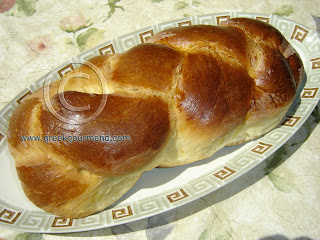
Tsoureki - The Bread That Swallows Its Tail

Image
Tsoureki… Greek Easter Bread Yesterday, in preparation for the Greek Orthodox Easter (or Pascha ) celebration, I made the traditional braided Greek Easter Bread known as tsoureki . I baked three loaves, one for my wife and I, one for our goddaughter, and one for our godson. As is typical, along with the bread, I dyed a dozen hardboiled eggs red. There is nary a Greek home anywhere on the planet that will not have these two elements present in the Holy Week to come. Easter is the most important religious celebration in Greece , and the customs and practices related to this period of the calendar are as diverse as the topography and regional differences within Greece . Yet, the dyed eggs and the plaited bread are universal. The reason we braid the tsoureki is to symbolize the Resurrection of Life that comes with springtime. The wedding of this symbolism to the Orthodox Christian Calendar and the figure of Jesus Christ is not a coincidence. The tradition of plaiting bread is old; ...