Posts

Greek Cucumber Salad - Αγγουροσαλάτα

Image
With the summer in full swing here in the northern hemisphere, many of us are seeking relief from stifling temperatures. In some regions new record seasonal highs have been recorded; here in Toronto the past week was a true scorcher. Fortunately, Greek food culture includes recipes that are perfectly suited to beating the heat. A bird's eye view of my Greek cucumber salad, click to enlarge When Greeks sit down to a summertime meal, they will invariably include a raw salad of one kind or another. One of the more popular summertime Greek salads in our family is the world famous Aggourosalata (ah-goo-roh-sah-LAH-ta), or, Cucumber Salad. There are a few variations on the theme, but it is a very basic dish and serves as a refreshing course alongside other summertime favourites. The cucumber has been α part of Greek cookery for millennia. It is used in the famous Tzatziki sauce , and can simply be sliced into wedges, salted or not, and consumed without any fuss, much ...
Macedonian Halva (Μακεδονικός Χαλβάς)

Image
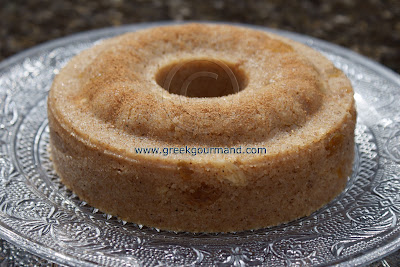
For those of you who are fasting for Lent or practicing vegetarian/vegans, this is your lucky day. Happy St. Patrick’s Day! Irish eyes are smilin'! :) Halva ready for service - Click to enlarge image One of the hardest aspects of a fast or strict dietary regimen is avoiding tempting sweets and finding acceptable substitutes for dessert courses. This is especially hard on kids. Confections like this one are popular amongst Greek families during the Lenten period. I simply loved this stuff as a child. Still do! There are probably as many variations on this recipe as there are Greek matrons with culinary opinions. My recipe is quite basic, feel free to add or substitute other elements like pine nuts, sesame seeds, walnuts, or whatever else tickles your fancy. A few drops of orange blossom water or even some lemon rind in the syrup could also be a nice touch. I should mention that not only are there numerous permutations for this recipe, there are also alterna...

Prasorizo - Leeks and Rice (Πρασόρυζο)

Image
Many of you are likely already familiar with the Greek dish, Spanakorizo (spinach and rice), but how many of you have tried Prasorizo? Leeks have been a part of the Greek pantry for millenia. In ancient Greece, there were leek growing competitions and the largest specimens were awarded as offerings to the gods . Prasorizo - served with a lemon wedge The fresh green onions and garlic are excellent complements to the leeks in this dish as they are all part of the genus Allium . This dish is vegan and fast-friendly. However, for those of you who are not (or only partially) fasting, some real Greek Feta cheese also goes well with this dish, whether on the side, or crumbled over top as a finishing touch. An easy and quick Greek recipe that is tasty and seasonal. Ingredients: 3 large leeks sliced into thin discs 4 - 6 green onions sliced 1 yellow onion, diced 1 cup long grain rice ½ cup of extra-virgin olive oil ¼ cup pine nuts ¼ cup of chopped parsle...

Mastiha Pumpkin Spice Soup - Κολοκυθόσουπα με Μαστίχα

Image
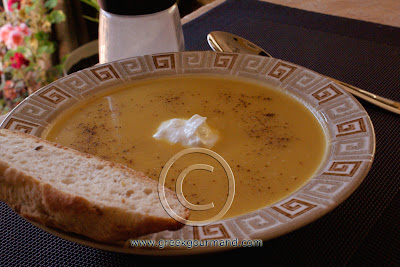
An exotic twist to my mother's pumpkin soup recipe. Makes for a rich and inspiring autumn dish that will leave you feeling warm and satisfied, physically and intellectually. Mastic (or Mastiha) Pumpkin Spice Soup for autumn lunch. Click to Enlarge. It is exciting times on the Greek culinary front. The Greeks are re-discovering one of their ancient aromatics, the rarest spice on the planet: mastiha (mastic). As exciting a development as this may be, it is a situation fraught with gastronomic risks. In the drive to incorporate mastiha into a “Greek” cooking palette and create new taste sensations, there have been some interesting offerings coming out of test kitchens all over the planet. Working the resin, mastiha, into a dish is not an easy thing. One must be familiar with the flavour of the aromatic and that takes practice. It is a good idea to buy the raw resin crystals and chew them to acquire the scent. When you do, you will realize it is a challenging flavour to incorpo...

Baked Sole (Γλώσσα στο Φούρνο)

Image
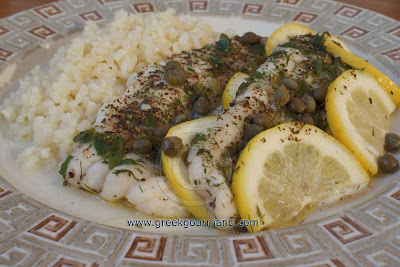
Looking for a healthy meal that is quick and easy to prepare? Something that will have you in and out of the kitchen in 30 minutes flat? Look no further, this recipe will have you sitting down to an enjoyable dinner before you can learn to say νιψονανομηματαμημονανοψιν ! Minimal prep time, basic ingredients, and very little supervision are required for this dish from the Aegean islands. A sampling of Aegean flavours - Click to Enlarge Image I first ran across variations of this dish on the island of Santorini, where I was working in the mid '90s. Being the adventurous sort, I spent a couple years getting the "Summer Lovers" thing out of my system by escaping to the Greek isles and experiencing all that they have to offer. Let me just say that the reality was everything I had imagined it to be and more. If you have ever considered just chucking everything and going to ground somewhere in the Aegean for an entire summer, I urge you to do it without a second tho...

Fasolada (Φασολάδα)

Image
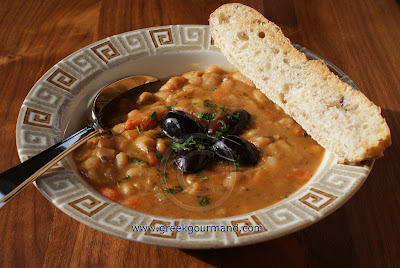
If people really are what they eat, then I am convinced that Greeks (and many Italians) are in no small part composed of various pulses. Growing up in a Greek household means that you have either learned to enjoy or to dread that next meal consisting of beans, lentils, and/or chickpeas; whether they are dried, fresh, roasted, baked, or boiled, believe me, we have had our fill. True Greek soul food . Click to Enlarge Image. Since the remotest antiquity, pulses have been a fundamental staple of Greek food culture. Indeed, beans were such a familiar item to Homer that he used a bouncing bean simile to describe the manner in which an arrow deflected from the armour of King Menelaus in a mortal encounter (Iliad, Book XIII, 589). And depending on whom you believe, Pythagoras either admonished against, or eagerly encouraged his fellows in the consumption of beans. Best thing about beans? They’re cheap! Next best thing about beans? They are good for you. Third best thing ...

Tastes of Cyprus – An Interview and a Recipe

Image
According to Greek Mythology, the island of Cyprus takes its name from the goddess Aphrodite, which makes the island her own special abode. I have never been to Cyprus, though I have heard of its natural beauty, and I do have a number of Cypriot friends. Toronto has a sizable Cypriot community, and over the years, I have had a chance to learn something about their ways and means. I have also had a chance to sample some of their foods. A table filled with Cypriot and Greek food specialties There are many similarities between the foods of Greece and Cyprus, but there are notable differences too. At the invitation of the Consul General of the Republic of Cyprus, Mr. Stavros Avgoustides, I had a chance to sample some specialties of that island nation. Last week, I had the pleasure of attending the annual cutting of the Vasilopita at the Cypriot Consulate in Toronto. It was a small, intimate affair which included family members of the consulate staff, the consul general and staff from...