Posts

Merry Christmas!!! with our favorite cookies
Image
Christmas is everyone’s favorite time of the year. I enjoy it mostly for the food! Many savory dishes and desserts are made only during the Christmas and New Year festivities. This makes things interesting but it is a pity we can’t enjoy them throughout the entire year. In Greece we have two favorite cookies which are found in every single house as well as every pastry shop in the country. We just love melomacarona and kourabiedes !! There is no such thing as Christmas without these cookies. Melomacarona are egg free cookies scented with cinnamon, clove and orange. After baking they are immediately dipped into thick honey syrup that makes them irresistible. Kourabiedes are very simple to make, since they are made only with flour, butter and sugar and are scented with vanilla and brandy or rum. Very good quality butter gives these cookies their characteristic taste and aroma. In Greece we use goat or sheep’s milk butter both of which have a very intense aroma, but any good quality m...
Quince, a fruit for gods!!!

Image
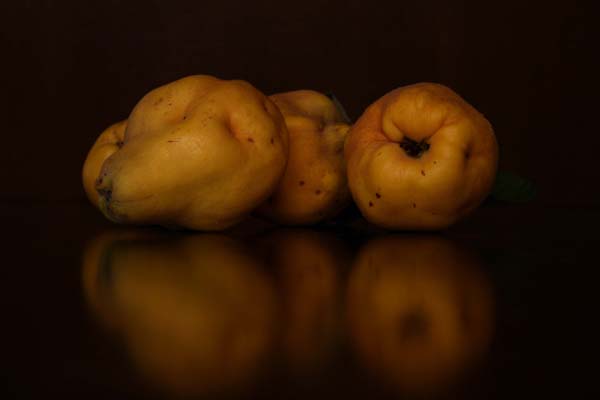
Quinces have been used in Greek cuisine for thousands of years. Ancient Greeks used to call them ‘’apples’’ and they used to combine them with meat in savory dishes or in simple desserts like baked quinces stuffed with honey and almonds’’. In mythology quince was the fruit dedicated to the goddess Aphrodite (Venus)  and the ‘apple’ given to her by Paris in the famous beauty contest.. Plutarch tells us that Solon (a lawgiver and poet) suggested that brides bite into a slice of quince before they met with their husbands to ensure  a memorable and pleasant first kiss! Nowadays we still use quinces in cooking, in festive dishes with pork or beef or in desserts the same way you would use apples. The following recipe is a ‘’spoon sweet’’ which is quince cooked in syrup. It is the simplest way to preserve fruits and then use them in pastry. Quinces make a very tasty preserve with a vibrant red color that matches perfectly with yogurt, cheesecake, or as it is. Ingredients 500gr quinc...

Kolokythopita- Savory Pumpkin Pie

Image
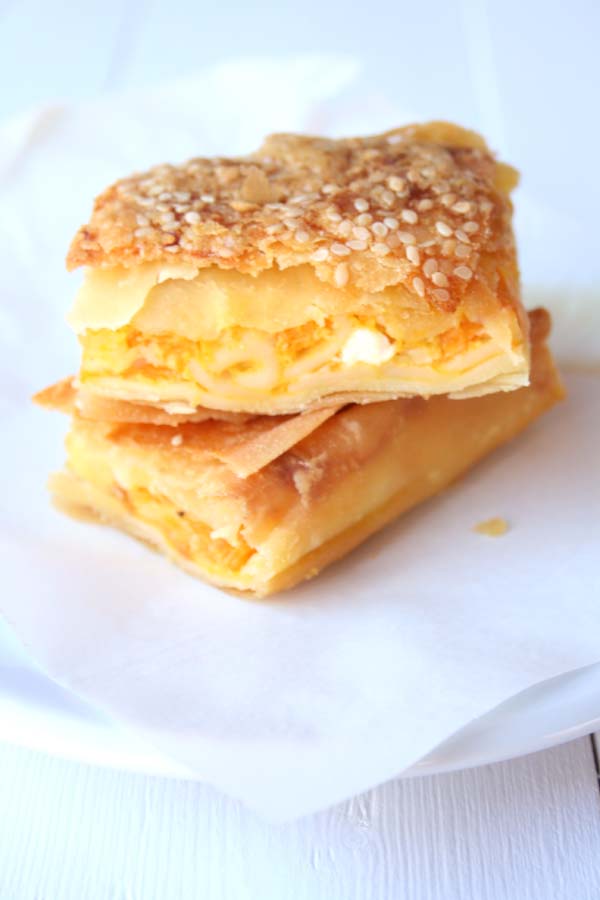
In Greek cuisine pumpkin is mostly used in savory or sweet pies ( kolokythopita ), but there is also a preserve - a ‘’spoon sweet ‘’ - as we call it, made with pumpkin and honey that in Rhodes island is called ‘’r etseli ’’. In the countryside almost every house has pumpkins even if only as a decorative plant on fences. Neighbors are competing to show who has the biggest pumpkin every year or who has the greatest production. Sweet pumpkin pie is made with the addition of raisins, walnuts, cinnamon, and, of course, sugar, and it is dusted with icing sugar after baking. This pie resembles apple pie and is served as a dessert. In the Peloponnesus we make a savory pie with feta cheese and this is one of our favorite winter dishes. You will notice that we use dried pasta in this pie, giving the pie extra taste This way the pumpkin juices are absorbed instead of merely being discarded. We use chylopites  which are small squares of pasta. You can use any kind of dried pasta but flat shape...

Fanouropita- Lost and found!

Image
Religious traditions often influence the eating habits of a nation. In Greece , Orthodox tradition has influenced our cuisine to such a degree that even those who are not religious keep the traditions. Family memories and customs keep them alive but, mostly, it is the pleasure that traditional food offers.   Fanouropita is a cake made on the 27th of August,- St. Fanourios Day. It is also made every time we have lost something or when we want to make a wish about something, - for example, good health or a new job. We used to make Fanouropita often at home because it’s a nice cake with coffee (Okay, we would make a wish from time to time!). Fanouropita is an egg and dairy free cake and according to tradition only 9 ingredients must be used to make it. Others believe that 12 is the correct number. I will give you the 9 ingredients version I know and also a twist with syrup to make it as a dessert.  Even if you haven’t lost anything, don’t lose the chance to make this! For a 20c...

Lahanoriso - cabbage, a huge flower bud!

Image
“To eat a nice cabbage, you have to wait until November” my grandfather used to say. Cold weather makes cabbages really sweet. In Greek cuisine cabbage is a basic winter vegetable because you can’t grow many things in your garden at this time of the year. It gives its special character, taste, and sweetness to many different recipes.          It matches ideally with pork or beef in dishes like ‘’staffed cabbage leaves’’ (dolmades) or pork and cabbage fricassee. It makes nice salads chopped finely with carrot or boiled in water and served warm with olive oil and lemon. But my favorite dish with cabbage is lahanoriso ; with carrot, rice, celery and olive oil, a simple, tasty and filling food.  My mother has been making this dish often in winter maybe because we always had cabbages in our garden at this time of the year. My favorite side dish for lahanoriso is fried potatoes, but if you would like to have a rich winter meal, a nice sausage would be ideal. Serv...

Fasolada - Our national dish!

Image
   Most tourists who visit Greece , are familiar with popular dishes like mousaka or souvlaki but probably no one knows that fasolada  (bean soup) is actually considered to be our national dish!  Why such a humble food?      In the old days when meat wasn’t available to everyone, beans were the main source of nutrients. As late as the Second World War, thousands of people survived thanks to soup kitchens offering fasolada. Nowadays, fasolada is a favorite winter dish and there is even a special day, - Shrove Monday -when everyone eats fasolada at home or in open air festivals where we also traditionally fly kites.      Many varieties of beans have been cultivated in Greece since the 16 th - 17 th century. The fact that beans can be easily cultivated in various soil qualities, helped to spread them all over the country. Kastoria in northern Greece is a place where some of the tastiest beans are produced from local varieties. In our t...

Galatopita - Milkpie

Image
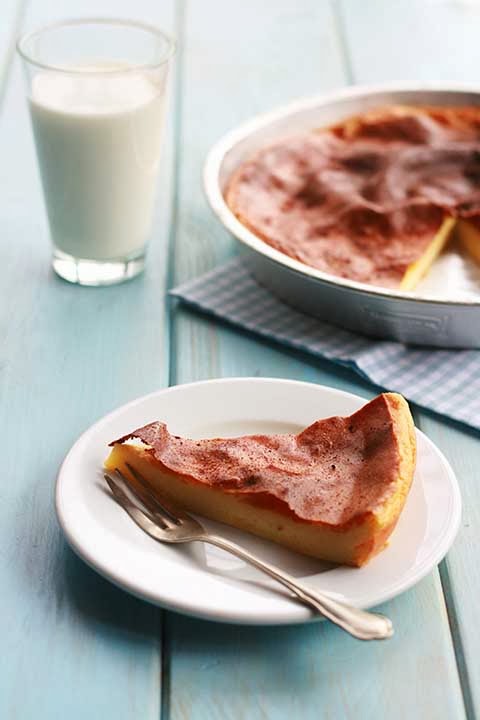
The four basic ingredients in pastry are sugar, eggs, flour, and milk. There are endless variations and proportions in which these four ingredients can be mixed to become different desserts. Nowadays there is a great variety of special pastry ingredients but in the old days people had to use their creativity, four basic ingredients, and maybe some spices and natural flavorings to make different desserts. Such a simple dessert in Greek cuisine is Galatopita (milk pie), a sweet baked cream with ingredients found in every house My grandmother had goats in our cottage house and galatopita with goats milk was often on the menu. The ideal combination to flavor a Galatopita is vanilla in the cream and some cinnamon to dust the pie just before baking. There are several variations to make this pie, like using semolina flour instead of all purpose flour, pie crust or fyllo as a base or simply flavoring it with lemon zest instead of vanilla. Galatopita Serves 4-5 500gr milk 100gr flour 80gr suga...